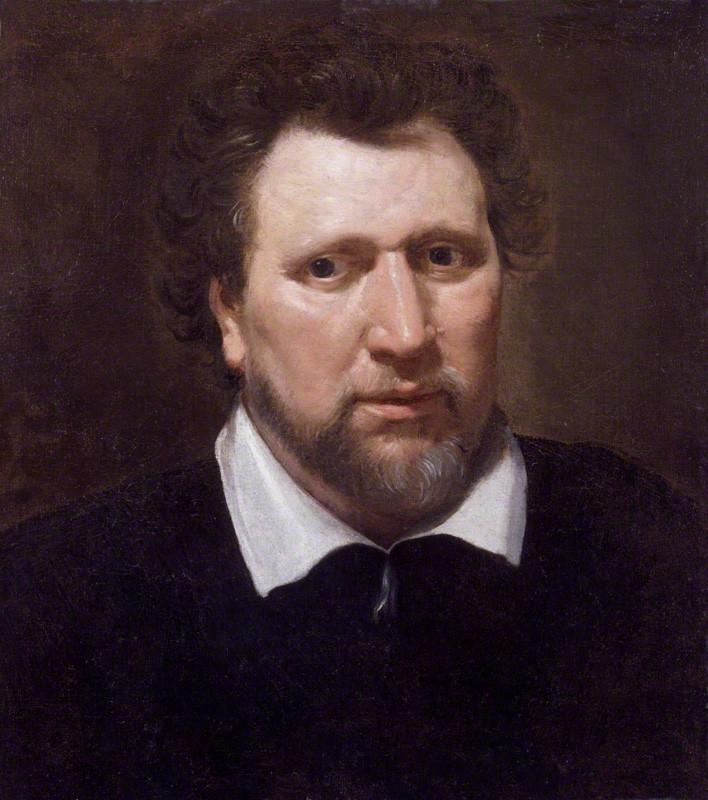
Frases célebres de Ben Jonson
“Quien no ha afrontado la adversidad no conoce su propia fuerza.”
comparar con la cita atribuida a Samuel Johnson: «Un hombre acostumbrado a las adversidades no es fácilmente sorprendido».
Fuente: [Señor] (1997), p. 7
“Las pruebas pesan más en la balanza de las justicia que los más elocuentes discursos.”
Fuente: [Señor] (1997), p. 327
Ben Jonson: Frases en inglés
The Works of Ben Jonson, Second Folio (1640), Timber: or Discoveries
“Whilst that for which all virtue now is sold,
And almost every vice — almighty gold.”
Epistle to Elizabeth, Countess of Rutland, lines 1-2. Comparable to "The flattering, mighty, nay, almighty gold", John Wolcot, To Kien Long, Ode iv; "Almighty dollar", Washington Irving, The Creole Village.
The Works of Ben Jonson, First Folio (1616), The Forest
“Thou look'st like Antichrist in that lewd hat.”
The Alchemist (1610), Act IV, scene vii
“Folly often goes beyond her bounds; but Impudence knows none.”
The Works of Ben Jonson, Second Folio (1640), Timber: or Discoveries
The Irish Masque at Court (1613)
Epitaph on the Countess of Pembroke, reported in Bartlett's Familiar Quotations, 10th ed. (1919). This epitaph is generally ascribed to Ben Jonson. It appears in the editions of his Works; but in a manuscript collection of Browne's poems preserved amongst the Lansdowne MS. No. 777, in the British Museum, it is ascribed to Browne, and awarded to him by Sir Egerton Brydges in his edition of Browne's poems.
“If all you boast of your great art be true;
Sure, willing poverty lives most in you.”
VI, To Alchemists, lines 1-2
The Works of Ben Jonson, First Folio (1616), Epigrams
“The dignity of truth is lost
With much protesting.”
Ben Jonson Catiline His Conspiracy
Catiline His Conspiracy (1611), Act III, scene ii
XLV, On My First Son, lines 1-12
The Works of Ben Jonson, First Folio (1616), Epigrams
“As he brews, so shall he drink.”
Ben Jonson Every Man in His Humour
Act ii, Scene 1
Every Man in His Humour (1598)
XXIII, An Ode, to Himself, lines 1-6
The Works of Ben Jonson, Second Folio (1640), Underwoods
“Thy praise or dispraise is to me alike;
One doth not stroke me, nor the other strike.”
LXI, To Fool, or Knave, lines 1-2
The Works of Ben Jonson, First Folio (1616), Epigrams
Referring to Francis Bacon
The Works of Ben Jonson, Second Folio (1640), Timber: or Discoveries
Conversations with William Drummond of Hawthornden (1711)
Epicene, or The Silent Woman (1609), Act I, scene i
Conversations with William Drummond of Hawthornden (1711)
“There's reason good, that you good laws should make:
Men's manners ne'er were viler, for your sake.”
XXIV, To The Parliament, lines 1-2
The Works of Ben Jonson, First Folio (1616), Epigrams
“A good life is a main argument.”
The Works of Ben Jonson, Second Folio (1640), Timber: or Discoveries
Conversations with William Drummond of Hawthornden (1711)
Ben Jonson Eastward Hoe
Act v, scene ii, lines 68-70
Eastward Hoe (1605)
Ben Jonson Catiline His Conspiracy
Catiline His Conspiracy (1611), Act III, scene ii
“The burnt child dreads the fire.”
Act I, scene 2
The Devil Is an Ass (performed 1616; published 1631)
“Thus, in his belly, can he change a sin,
Lust it comes out, that gluttony went in.”
CXVIII, On Gut, lines 5-6
The Works of Ben Jonson, First Folio (1616), Epigrams
“Reader, look,
Not at his picture, but his book.”
To the Reader [On the portrait of Shakespeare prefixed to the First Folio] (1618), lines 9-10
LXX, To the Immortal Memory of Sir Lucius Cary and Sir Henry Morison, lines 65-74
The Works of Ben Jonson, Second Folio (1640), Underwoods
That Women Are But Men's Shadows, lines 1-4
The Works of Ben Jonson, First Folio (1616), The Forest
“It is an art to have so much judgment as to apparel a lie well, to give it a good dressing.”
The Works of Ben Jonson, Second Folio (1640), Timber: or Discoveries
“Still may syllabes jar with time,
Still may reason war with rhyme,
Resting never!”
XXIX, A Fit of Rhyme Against Rhyme
The Works of Ben Jonson, Second Folio (1640), Underwoods