
Jacob Bronowski The Ascent of Man
Episode 1: "Lower than the Angels"
The Ascent of Man (1973)
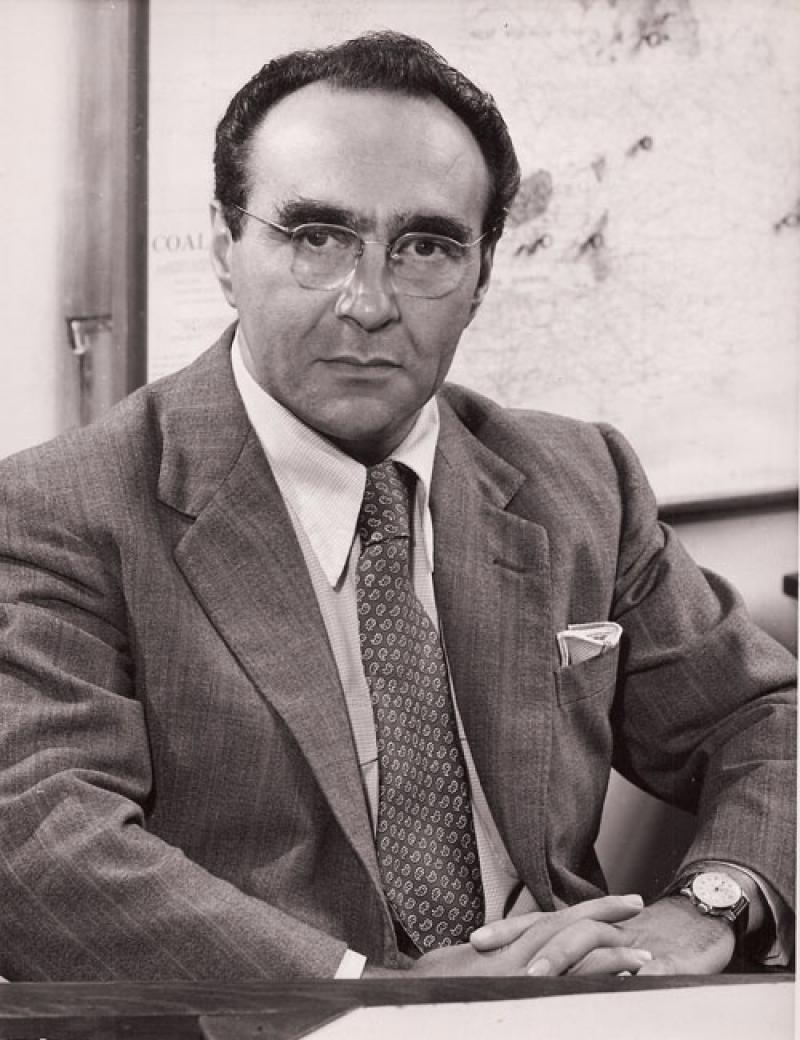
Jacob Bronowski fue un matemático polaco de origen judío nacionalizado británico, célebre sobre todo por su serie de divulgación científica para la televisión El ascenso del hombre, a partir de la cual se publicó luego un libro con el mismo título.[2] Esta obra, que describe en 13 capítulos la historia del desarrollo intelectual del ser humano, sus ganancias y sus pérdidas, sus dolores y sus aciertos, lo convirtió en uno de los más importantes divulgadores de la ciencia y, a la vez, en uno de los pocos representantes de un humanismo renacentista en pleno siglo XX.
Fue también poeta, inventor, autor teatral, humanista y publicó un total de once libros. A su muerte, trabajaba en el Instituto Salk de Estudios Biológicos, en La Jolla, California, Estados Unidos.
Con motivo de la gran herida causada a la humanidad por la equívoca aplicación de los avances teóricos de la física atómica durante la Segunda Guerra Mundial , cambió sus intereses, al igual que muchos otros físicos teóricos y físicos aplicados de su época, por las ciencias humanas y las ciencias de la vida . Wikipedia
Jacob Bronowski The Ascent of Man
Episode 1: "Lower than the Angels"
The Ascent of Man (1973)
The Common Sense of Science (1951), on the influence of Isaac Newton.
Jacob Bronowski The Ascent of Man
Episode 11: "Knowledge or Certainty"
The Ascent of Man (1973)
"Sense and Sensibility"
The Common Sense of Science (1951)
Part 1: "The Creative Mind", §9 ( p. 20 http://books.google.com/books?id=TeHXAAAAMAAJ&q=%22We+re-make+nature+by+the+act+of+discovery+in+the+poem+or+in+the+theorem+And+the+great+poem+and+the+deep+theorem+are+new+to+every+reader+and+yet+are+his+own+experience+because+he+himself+re-creates+them%22&pg=PA20#v=onepage) <br class="br">Science and Human Values (1956, 1965)
As quoted in World Authors 1950–1970 (1975) by J. Wakeman, pp. 221–223
"The Reach of Imagination" (1967)
Jacob Bronowski The Ascent of Man
The Ascent of Man (1973)
It comes out at twenty-eight days. As Newton said, "They agreed pretty nearly."
The Origins of Knowledge and Imagination (1978)
Jacob Bronowski The Ascent of Man
Episode 13: "The Long Childhood"
The Ascent of Man (1973)
“Dissent is the mark of freedom.”
unsorted
Science and Human Values (1956, 1965)
"The Reach of Imagination" (1967)
"The Reach of Imagination" (1967)
"The Imaginative Mind in Art" (1978)
as quoted in American Journal of Physics, 44(2), p176, 1976-02
unsorted
Science and Human Values (1956, 1965)
"The Scientific Revolution and the Machine"
The Common Sense of Science (1951)
The Reader's Digest (1964) Vol. 84; also quoted in Structure and Plan (1974) by Glen A. Love, p. 154
“The world can only be grasped by action, not by contemplation.”
Jacob Bronowski The Ascent of Man
Unidentified episode
The Ascent of Man (1973)
The Origins of Knowledge and Imagination (1978)
Jacob Bronowski The Ascent of Man
Fuente: The Ascent of Man (1973), Ch. 1 Lower than the Angels.
"The Reach of Imagination" (1967)
“Science, like art, is not a copy of nature but a re-creation of her.”
Part 1: "The Creative Mind", §9 (p. 20)
Science and Human Values (1956, 1965)