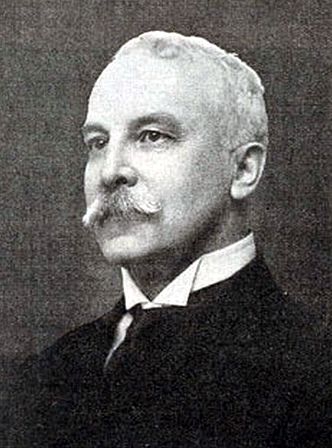
Frases de Harrington Emerson

Harrington Emerson fue una de las figuras más importantes y relevantes que revolucionaron la Ingeniería Industrial.

Es conocido por sus contribuciones a la administración científica, donde desarrolló un enfoque que contrasta la eficiencia. Wikipedia  

✵ 2. agosto 1853 – 2. septiembre 1931
Harrington Emerson Foto
Harrington Emerson: 9 citas0 Me gusta

Harrington Emerson: Frases en inglés

“Twelve Principles of Efficiency”

Harrington Emerson

The twelve principles of efficiency (1912)

“The schedule is a moral contract or agreement with the men as to a particular machine operation, rate of wages and time. Any change in men [etc. ] calls for a new schedule.”

Harrington Emerson

Harrington Emerson, as cited in: Horace Bookwalter Drury (1918) Scientific Management: A History and Criticism http://archive.org/stream/scientificmanag00druruoft#page/140/mode/2up. p. 142

“It is psychology, not soil or climate, that enables a man to raise five times as many potatoes per acre as the average in his own state.”

Harrington Emerson

Fuente: The twelve principles of efficiency (1912), p. 107 ; cited in: Hugo Münsterberg. Psychology and Industrial Efficiency, 1913, p. 52

“The individual effort method of increasing the reward of the wage-earner includes all that is best in other methods, and attempts to exclude all that is objectionable. Its good points are summed up as follows:
# The standard time set is reasonable and one that can be reached without extraordinary effort, is in fact such time as a good foreman would demand.
# An extra reward of one-fifth of the regular wages for the operation is given to whoever makes standard time.
# Extra compensation above the hourly rate is paid even if standard time is not reached, although this extra compensation diminishes in percentage above standard time-and-a-half.
# If longer than time-and-a-half is taken, the regulai day rate is paid. Of this, the wage-earner is also sure.
# Standard time is carefully determined by observation and experiment, and is only changed when conditions change.
# The arrangement is one of mutual benefit to both parties — of increased earning to the worker, of increased saving to the employer.
# The employer loses more than the wage-earner if schedules do not encourage co-operation.
# The wage-earner, working on a schedule, becomes in a large degree his own foreman.
# The wage-earner determines his own earning power, and by co-operating to cut out wastes increases his own value.”

Harrington Emerson

Harrison Emerson, " Shop betterment and the individual effort method of profit-sharing http://archive.org/stream/americanengineer80newy#page/64/mode/1up" in: International Railway Journal Vol. 13. p. 61. 1905; Partly cited in Drury (1918, p. 141)

Autores similares

Nikola Tesla Foto
Nikola Tesla32
inventor, ingeniero mecánico e ingeniero eléctrico de orige… None
Guillermo Marconi Foto
Guillermo Marconi2
ingeniero eléctrico, empresario e inventor italiano None
Paul Dirac Foto
Paul Dirac6
Físico teórico None
Luciano De Crescenzo Foto
Luciano De Crescenzo5
escritor italiano None
Enzo Ferrari Foto
Enzo Ferrari27
ingeniero y empresario italiano, fundador de la Scuderia Fe… None
Arthur Miller Foto
Arthur Miller15
dramaturgo estadounidense None
Robert Lee Frost Foto
Robert Lee Frost19
poeta estadounidense None
Arthur Compton Foto
Arthur Compton2
Físico estadounidense None
Frank Herbert Foto
Frank Herbert8
escritor estadounidense None