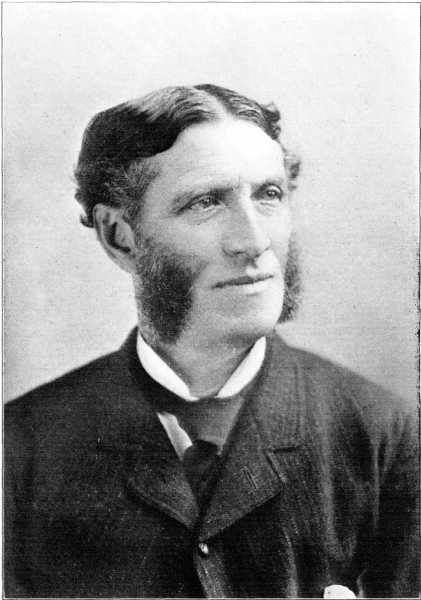
Frases célebres de Matthew Arnold
“Y entre nosotros uno, quien más ha sufrido, desalienta. Su asiento sobre el trono intelectual.”
Capítulo 19
The Scholar Gypsy (1853)
Fuente: [Matthew] (1996).
“El destino tiene, lo que Chance no controlará, su triste lucidez de alma.”
Fuente: [Matthew] (2012).
Fuente: Resignation (1849), p. 197
“Cavernas llenas de arena, frescas y profundas. Donde los vientos estan dormidos.”
Capítulo 3
The Forsaken Merman (1849)
Fuente: [Matthew] (1998).
Capítulo 7
The Forsaken Merman (1849)
Fuente: [Matthew] (1998).
“Pero ellos, creedme, que os esperan. No hay regalos de Chance, has conquistado el destino.”
Fuente: [Matthew] (2012).
Fuente: Resignation (1849), p. 215
“Goethe en Weimar duerme, y Grecia, hace mucho tiempo, vio cesar la lucha de Byron.”
Capítulo 1
Memorial Verses (1852)
Fuente: [Matthew] (2012).
Matthew Arnold: Frases en inglés
Wordsworth, originally published as "Preface to the Poems of Wordsworth" in Macmillan's Magazine (July 1879)
Essays in Criticism, second series (1888)
Contexto: If what distinguishes the greatest poets is their powerful and profound application of ideas to life, which surely no good critic will deny, then to prefix to the word ideas here the term moral makes hardly any difference, because human life itself is in so preponderating a degree moral.
It is important, therefore, to hold fast to this: that poetry is at bottom a criticism of life; that the greatness of a poet lies in his powerful and beautiful application of ideas to life — to the question, How to live. Morals are often treated in a narrow and false fashion, they are bound up with systems of thought and belief which have had their day, they are fallen into the hands of pedants and professional dealers, they grow tiresome to some of us. We find attraction, at times, even in a poetry of revolt against them; in a poetry which might take for its motto Omar Khayam's words: "Let us make up in the tavern for the time which we have wasted in the mosque." Or we find attractions in a poetry indifferent to them, in a poetry where the contents may be what they will, but where the form is studied and exquisite. We delude ourselves in either case; and the best cure for our delusion is to let our minds rest upon that great and inexhaustible word life, until we learn to enter into its meaning. A poetry of revolt against moral ideas is a poetry of revolt against life; a poetry of indifference towards moral ideas is a poetry of indifference towards life.
“For poetry the idea is everything; the rest is a world of illusion, of divine illusion.”
Introduction to Ward's English Poets (1880)
Contexto: For poetry the idea is everything; the rest is a world of illusion, of divine illusion. Poetry attaches its emotion to the idea; the idea is the fact. The strongest part of our religion today is its unconscious poetry.
“We are here on earth to do good to others. What the others are here for, I do not know.”
Fuente: Essays In Criticism By Matthew Arnold
“Resolve to be thyself; and know, that he
Who finds himself, loses his misery.”
"Self-Dependence" (1852), lines 31-32
Fuente: The Poetical Works of Matthew Arnold
“Sand-strewn caverns, cool and deep,
Where the winds are all asleep.”
St. 3
The Forsaken Merman (1849)
"Irish Essays. Ecce, Convertimur ad Gentes" (1882)
"Democracy" (1861)
"The Buried Life" (1852), st. 6
Fuente: Culture and Anarchy (1869), Ch. I, Sweetness and Light
The Functions of Criticism at the Present Time (1864)
"Irish Essays. A Speech at Eton" (1882)
“Goethe in Weimar sleeps, and Greece,
Long since, saw Byron’s struggle cease.”
St. 1
Memorial Verses (1852)
“Thou hast no right to bliss.”
Act I, sc. ii
Empedocles on Etna (1852)
“Creep into thy narrow bed,
Creep, and let no more be said!”
St. 1
The Last Word (1867)


