“Against our wills, papa—against our wills!”
The Pirates of Penzance (1879)
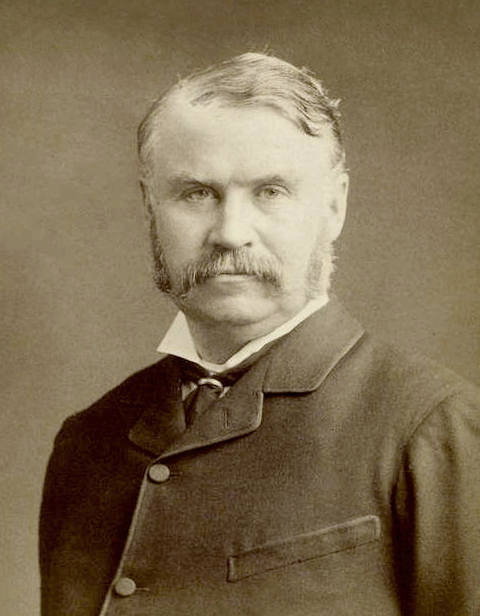
William Schwenck Gilbert[1] fue un dramaturgo, libretista e ilustrador inglés. Es conocido por sus 14 óperas cómicas producidas en colaboración con el compositor sir Arthur Sullivan, entre las que se encuentran H.M.S. Pinafore, The Pirates of Penzance y una de las obras representadas con mayor frecuencia en la historia del teatro musical, El Mikado.[2][3] Estas, así como otras de sus óperas del Savoy, siguen siendo interpretadas regularmente a nivel mundial.
Gilbert también escribió Bab Ballads, una colección de versos ligeros acompañados por caricaturas realizadas por él mismo. Además, escribió más de 75 obras y libretos, numerosas historias, poemas, canciones y otras piezas, tanto serias como cómicas. Sus obras y su estilo realista para la dirección teatral inspiraron a otros artistas, incluyendo a Oscar Wilde y George Bernard Shaw.[4] De acuerdo con The Cambridge History of English and American Literature, la «facilidad lírica [de Gilbert] y su maestría de la métrica elevó la calidad poética de la ópera cómica a una posición que no había alcanzado antes y que no ha vuelto a alcanzar desde entonces.»[5] Wikipedia
“Against our wills, papa—against our wills!”
The Pirates of Penzance (1879)
With a shake of his poor little head he replied,
"Oh, Willow, titwillow, titwillow!"
The Suicide's Grave (from The Mikado).
Bartlett's Familiar Quotations, 10th ed. (1919)
“In spite of all temptations
To belong to other nations,
He remains an Englishman!”
H.M.S. Pinafore (1878)
Fuente: 1878, HMS Pinafore, act 2, also quoted in Dictionary of Quotations, p. 354 (2005)
H.M.S. Pinafore (1878)
Fuente: 1878, HMS Pinafore, act 2, also quoted in Dictionary of Quotations, p. 353-354 (2005)
“So I fell in love with a rich attorney's Elderly, ugly daughter.”
Trial by Jury (1875)
Fuente: 1875, also quoted in Dictionary of Quotations, p. 353 (2005)
Actually an ad-lib introduced by Rutland Barrington when playing the rôle of Pooh-Bah, to the annoyance of Gilbert.
The Mikado (1885)


