“Too nicely Jonson knew the critic's part;
Nature in him was almost lost in Art.”
To Sir Thomas Hammer on his Edition of Shakespeare.
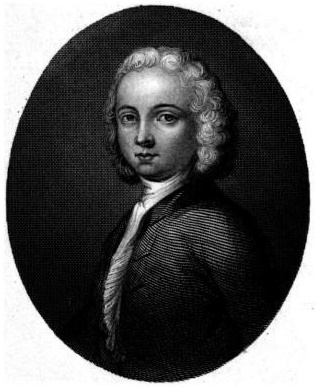
William Collins es un poeta inglés, uno de los poetas de cementerio.
Nacido en Chichester, West Sussex, estudió en el Winchester College y en la Universidad de Oxford. Se trasladó a Londres en los cuarenta del siglo XVIII. Vivió en un estado próximo a la miseria, perdida la razón en sus últimos años, que pasó en Chichester. Murió en un manicomio.
Su influencia sólo fue superada por la de Thomas Gray. Fue un importante poeta de mediados del siglo XVIII. Sus odas líricas marcaron el distanciamiento respecto a la poesía de la generación de Alexander Pope y apuntaban a la era romántica que le seguiría; por ello es considerado precursor del romanticismo. Sus poesías no recibieron el aplauso público que merecían. Wikipedia
“Too nicely Jonson knew the critic's part;
Nature in him was almost lost in Art.”
To Sir Thomas Hammer on his Edition of Shakespeare.
Fuente: The Passions, an Ode for Music (1747), Line 57. Compare: "Sweetest melodies / Are those that are by distance made more sweet", William Wordsworth, Personal Talk, stanza 2.
“When Music, heavenly maid, was young,
While yet in early Greece she sung.”
Fuente: The Passions, an Ode for Music (1747), Line 1.
“Fill'd with fury, rapt, inspired.”
Fuente: The Passions, an Ode for Music (1747), Line 10.
Samuel Johnson The Lives of the Most Eminent English Poets (1781), "William Collins" http://www.bookrags.com/ebooks/4678/50.html <br class="br">Criticism
“O Music! sphere-descended maid,
Friend of Pleasure, Wisdom's aid!”
Fuente: The Passions, an Ode for Music (1747), Line 95.
Fuente: Ode to Evening (1747) http://www.netpoets.com/classic/poems/017002.htm, line 9.
“Well may your hearts believe the truths I tell:
'T is virtue makes the bliss, where'er we dwell.”
Oriental Eclogues. 1, Line 5. Compare: "That virtue only makes our bliss below, / And all our knowledge is ourselves to know", Alexander Pope, Essay on Man, Epistle iv, line 397.
“By fairy hands their knell is rung,
By forms unseen their dirge is sung.”
Fuente: How Sleep the Brave (1748), line 7.
“How sleep the brave, who sink to rest,
By all their country’s wishes blest!”
Variante: How sleep the brave who sink to rest
By all their country's wishes blest!
Fuente: How Sleep the Brave (1748), line 1.
Fuente: Ode Occasioned by the Death of Mr. Thomson, (1748) http://www.luminarium.org/eightlit/collins/thomson.php, line 1.
Fuente: Ode to Evening (1747) http://www.netpoets.com/classic/poems/017002.htm, line 21.
Ode written in the year 1746. A variation of the first two lines is "By hands unseen the knell is rung; / By fairy forms their dirge is sung".
“Love of peace, and lonely musing,
In hollow murmurs died away.”
Fuente: The Passions, an Ode for Music (1747), Line 67.
“T was sad by fits, by starts 't was wild.”
Fuente: The Passions, an Ode for Music (1747), Line 28.
Fuente: Ode Occasioned by the Death of Mr. Thomson, (1748) http://www.luminarium.org/eightlit/collins/thomson.php, line 29.