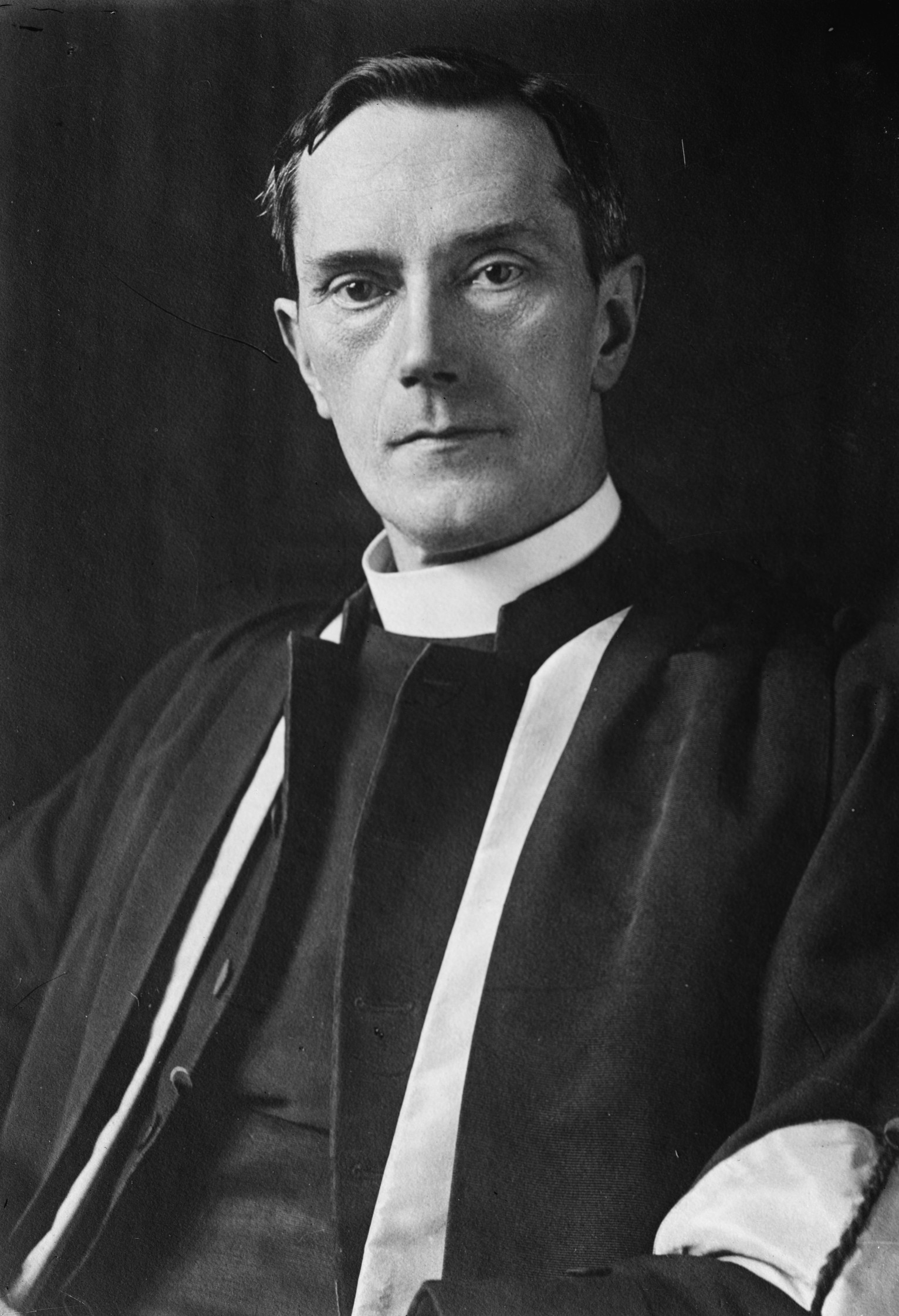
Frases de William Ralph Inge

William Ralph Inge was an English author, Anglican priest, professor of divinity at Cambridge, and Dean of St Paul's Cathedral, which provided the appellation by which he was widely known, Dean Inge. He was nominated for the Nobel Prize in Literature three times.

✵ 6. junio 1860 – 26. febrero 1954  •  Otros nombres William Inge
William Ralph Inge Foto
William Ralph Inge: 18 citas1 Me gusta

William Ralph Inge: Frases en inglés

“The fruit of the tree of knowledge, always drives man from some paradise or other.”

William Ralph Inge The Idea of Progress

"The Idea of Progress" http://books.google.com/books?id=TbgYAAAAYAAJ&q=%22The+fruit+of+the+tree+of+knowledge+always+drives+man+from+some+paradise+or+other%22&pg=PA5#v=onepage, Romanes Lecture (27 May 1920), reprinted in Outspoken Essays: Second Series (1922)

“The phase of thought or feeling which we call Mysticism has its origin in that which is the raw material of all religion, and perhaps of all philosophy and art as well, namely, that dim consciousness of the beyond, which is part of our nature as human beings.”

William Ralph Inge

Christian Mysticism (1899), Preface
Contexto: The phase of thought or feeling which we call Mysticism has its origin in that which is the raw material of all religion, and perhaps of all philosophy and art as well, namely, that dim consciousness of the beyond, which is part of our nature as human beings. Men have given different names to these "obstinate questionings of sense and outward things." We may call them, if we will, a sort of higher instinct, perhaps an anticipation of the evolutionary process; or an extension of the frontier of consciousness; or, in religious language, the voice of God speaking to us. Mysticism arises when we try to bring this higher consciousness into relation with the other contents of our minds.

“No word in our language — not even "Socialism"— has been employed more loosely than "Mysticism."”

William Ralph Inge

Christian Mysticism (1899) http://www.gutenberg.org/ebooks/14596, Preface <br class="br">Contexto: No word in our language — not even &quot;Socialism&quot;— has been employed more loosely than &quot;Mysticism.&quot; … The history of the word begins in close connexion with the Greek mysteries. A mystic is one who has been, or is being, initiated into some esoteric knowledge of Divine things, about which he must keep his mouth shut…

“True contemplation considers Reality (or Being) in its manifestations as well as in its origin. If this is remembered, there need be no conflict between social morality and the inner life.”

William Ralph Inge

Light, Life, and Love: Selections from the German Mystics of the Middle Ages (1904) http://www.ccel.org/ccel/inge/light.toc.html, p. xxx - PDF and epub at Google Books http://books.google.com/books?id=Wt4PAAAAYAAJ <br class="br">Contexto: True contemplation considers Reality (or Being) in its manifestations as well as in its origin. If this is remembered, there need be no conflict between social morality and the inner life. Eckhart recognises that it is a harder and a nobler task to preserve detachment in a crowd than in a cell; the little daily sacrifices of family life are often a greater trial than selfimposed mortifications. &quot;We need not destroy any little good in ourselves for the sake of a better, but we should strive to grasp every truth in its highest meaning, for no one good contradicts another.&quot; &quot;Love God, and do as you like, say the Free Spirits. Yes; but as long as you like anything contrary to God&#x27;s will, you do not love Him.&quot;<br>There is much more of the same kind in Eckhart&#x27;s sermons — as good and sensible doctrine as one could find anywhere.

“So the pendulum swings, now violently, now slowly; and every institution not only carries within it the seeds of its own dissolution, but prepares the way for its most hated rival.”

William Ralph Inge

&quot; Democracy and the Future http://books.google.com/books?id=KAhOjxIHy4QC&amp;q=&amp;quot;so+the+pendulum+swings+now+violently+now+slowly+and+every+institution+not+only+carries+within+it+the+seeds+of+its+own+dissolution+but+prepares+the+way+for+its+most+hated+rival&amp;quot;&amp;pg=PA289#v=onepage&quot; The Atlantic Monthly (March 1922)

“Civilization is a disease which is almost invariably fatal.”

William Ralph Inge The Idea of Progress

&quot;The Idea of Progress&quot; http://books.google.com/books?id=TbgYAAAAYAAJ&amp;q=Devil+in+human+form, Romanes Lecture (27 May 1920), reprinted in Outspoken Essays: Second Series (1922)

“We have enslaved the rest of the animal creation, and have treated our distant cousins in fur and feathers so badly that beyond doubt, if they were able to formulate a religion, they would depict the Devil in human form.”

William Ralph Inge The Idea of Progress

&quot;The Idea of Progress&quot; http://books.google.com/books?id=TbgYAAAAYAAJ&amp;q=Devil+in+human+form, Romanes Lecture (27 May 1920), reprinted in Outspoken Essays: Second Series (1922)

“Worry is interest paid on trouble before it falls due.”

William Ralph Inge

Attributed to Inge in The Columbia Dictionary of Quotations (1993), which cites the London Observer, 14 February 1932. However, this aphorism was in circulation decades earlier, e.g., it features in an advertisement in The Grape Belt, 2 October 1906, p. 5 http://news.google.com/newspapers?id=LY9CAAAAIBAJ&amp;sjid=tLkMAAAAIBAJ&amp;pg=5967,3394664&amp;dq=worry-is-interest-paid-on-trouble-before-it-falls-due&amp;hl=en <br class="br">Misattributed

“It is becoming impossible for those who mix at all with their fellow-men to believe that the grace of God is distributed denominationally.”

William Ralph Inge

&quot; Our Present Discontents http://books.google.com/books?id=dFYPAQAAIAAJ&amp;q=&amp;quot;It+is+becoming+impossible+for+those+who+mix+at+all+with+their+fellow-men+to+believe+that+the+grace+of+God+is+distributed+denominationally&amp;quot;&amp;pg=PA32#v=onepage&quot; (August 1919) in Outspoken Essays (1919), p. 32

“When our first parents were driven out of Paradise, Adam is believed to have remarked to Eve: "My dear, we live in an age of transition."”

William Ralph Inge

Assessments and Anticipations http://books.google.com/books?id=87AxAAAAMAAJ&amp;q=&amp;quot;When+our+first+parents+were+driven+out+of+Paradise+Adam+is+believed+to+have+remarked+to+Eve+My+dear+we+live+in+an+age+of+transition&amp;quot;&amp;pg=PA261#v=onepage (1929), p. 261

“Patriotism varies, from a noble devotion to a moral lunacy.”

William Ralph Inge

"Our Present Discontents" (August 1919) in Outspoken Essays (1919), p. 2

“It is useless for the sheep to pass resolutions in favour of vegetarianism while the wolf remains of a different opinion.”

William Ralph Inge

&quot; Patriotism http://books.google.com/books?id=dFYPAQAAIAAJ&amp;q=%22It%20is%20useless%20for%20the%20sheep%20to%20pass%20resolutions%20in%20favour%20of%20vegetarianism%20while%20the%20wolf%20remains%20of%20a%20different%20opinion%22&amp;pg=PA42-43#v=onepage&amp;q&amp;f=false&quot; (August 1919) in Outspoken Essays (1919), pp. 42-43

“I have never understood why it should be considered derogatory to the Creator to suppose that he has a sense of humour.”

William Ralph Inge

&quot;Confessio Fidei&quot; http://archive.org/stream/outspokenessays00ingeiala#page/24/mode/2up/search/I+have+never+understood+why+it+should+be+considered+derogatory+to+the+Creator+to+suppose+that+he+has+a+sense+of+humour, Outspoken Essays (Second Series) (1922)

Autores similares

Elizabeth Taylor Foto
Elizabeth Taylor13
actriz estadounidense None
John Katzenbach Foto
John Katzenbach142
escritor estadounidense None
Jack London Foto
Jack London22
escritor estadounidense None
Francis Scott Fitzgerald Foto
Francis Scott Fitzgerald98
escritor estadounidense None
Allen Ginsberg Foto
Allen Ginsberg3
poeta beat estadounidense None
Ozzy Osbourne Foto
Ozzy Osbourne9
cantante y compositor británico None
Jiddu Krishnamurti Foto
Jiddu Krishnamurti30
Filósofo espiritual hindú None
Paul Samuelson Foto
Paul Samuelson23
economista estadounidense None
Max Lucado Foto
Max Lucado37
None
Meryl Streep Foto
Meryl Streep14
Actriz estadounidense None