“This man is the master of us all.”
Er ist der Meister von uns allen!
Haydn, at a performance of Messiah. Quoted in John Galt George the Third, His Court and Family (1824) p. 34, and in Leopold Schmidt Joseph Haydn (1898) p. 86.
Criticism
Georg Friedrich Händel[nota 1] ; en inglés George Frideric Handel fue un compositor alemán, posteriormente nacionalizado inglés, considerado una de las figuras cumbre de la historia de la música, especialmente la barroca, y uno de los más influyentes compositores de la música occidental y universal.[1] En la historia de la música, es el primer compositor moderno[2] en haber adaptado y enfocado su música para satisfacer los gustos y necesidades del público,[2] en vez de los de la nobleza y de los mecenas, como era habitual.
Considerado el sucesor y continuador de Henry Purcell,[3] marcó toda una era en la música inglesa.[4] Para varios expertos es el primer gran maestro de la música basada en la técnica de la homofonía[5] y el más grande dentro del ámbito de los géneros de la ópera seria italiana[6] y para algunos hasta en el oratorio, por delante de Bach.[7]
Su legado musical, síntesis de los estilos alemán, italiano, francés e inglés de la primera mitad del siglo XVIII d. C., incluye obras en prácticamente todos los géneros de su época, donde 43 óperas, 26 oratorios y un legado coral son lo más sobresaliente e importante de su producción musical.
Wikipedia
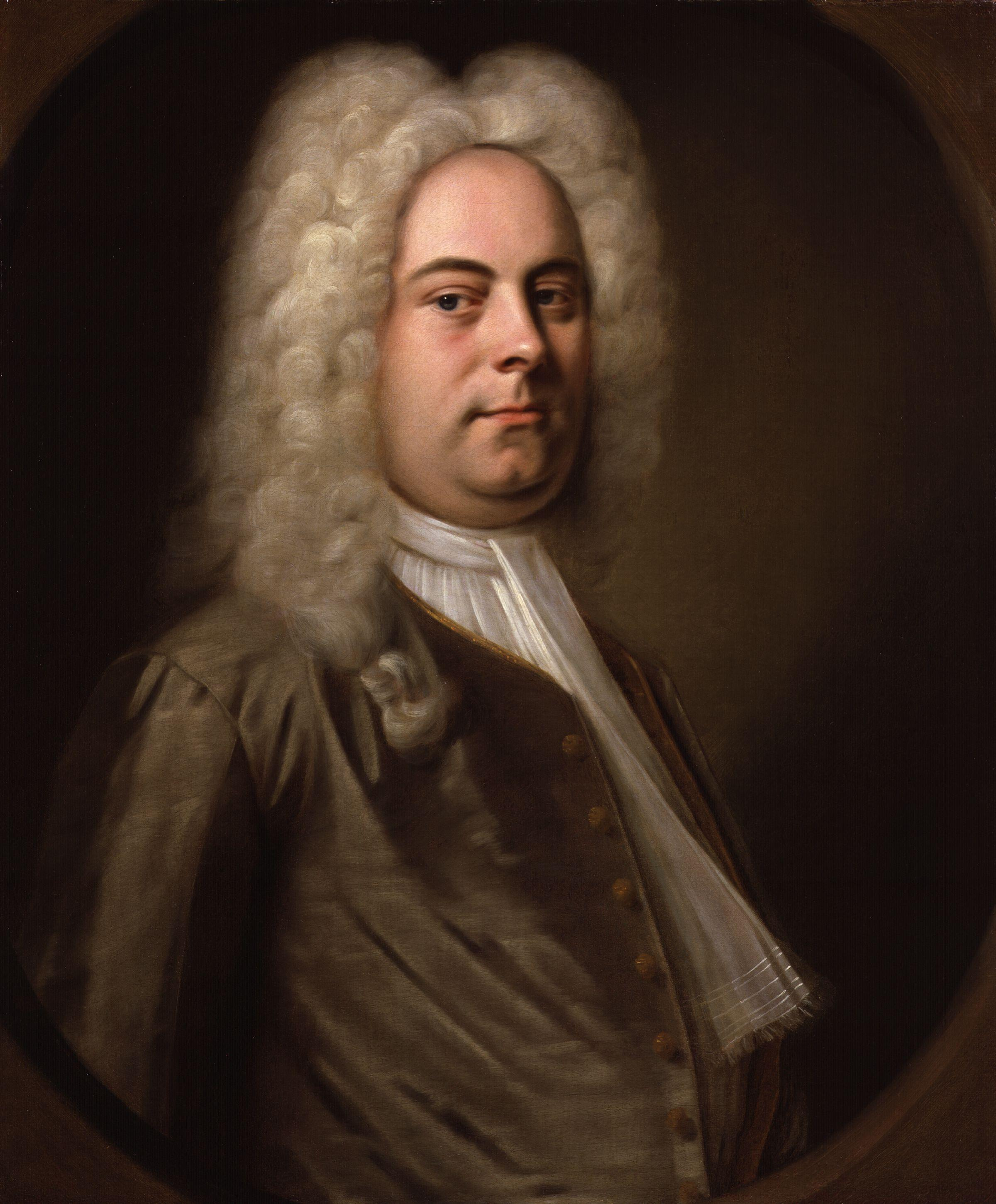
“This man is the master of us all.”
Er ist der Meister von uns allen!
Haydn, at a performance of Messiah. Quoted in John Galt George the Third, His Court and Family (1824) p. 34, and in Leopold Schmidt Joseph Haydn (1898) p. 86.
Criticism
“I should be sorry if I only entertained them, I wish to make them better.”
James Beattie, letter of May 25, 1780, published in William Forbes An Account of the Life and Writings of James Beattie, LL.D. (1806) p. 331.
In reply to Lord Kinnoull, who had complimented him on his Messiah, "the noble entertainment which he had lately given the town". Beattie had this on the authority of Kinnoull himself.
“Händel is the greatest and ablest of all composers; from him I can still learn.”
Händel ist der Größte und Fähigste aller Komponisten; von ihm kann ich immer noch lernen. <br class="br">Beethoven on his deathbed, speaking to Gerhard von Breuning. Published in Friedrich Kerst Beethoven der Mann und der Künstler, wie in seinen Eigenen Words enthüllt no. 111 http://www.bucheralle.org/6C76626D613131/ch35.html; Friedrich Kerst (trans. Henry Edward Krehbiel) Beethoven, the Man and the Artist, as Revealed in his own Words (1964), p. 54. <br class="br">Criticism
“Händel is the greatest composer that ever lived. I would uncover my head and kneel on his grave.”
Händel ist der größte Komponist, der je lebte. Ich würde meine Kopfbedeckung abnehmen und auf seinem Grab knien. <br class="br">Beethoven, speaking to J. A. Stumpff in the autumn of 1823. Published in Friedrich Kerst Beethoven der Mann und der Künstler, wie in seinen Eigenen Words enthüllt no. 112 http://www.bucheralle.org/6C76626D613131/ch35.html; Friedrich Kerst (trans. Henry Edward Krehbiel) Beethoven, the Man and the Artist, as Revealed in his own Words (1964), p. 54. <br class="br">Criticism
Richard Alexander Streatfeild Handel (2005) p. 195, citing Anton Schmid Christoph Willibald Ritter von Gluck (1854) p. 29
In conversation with Gluck.
Samuel Butler Notebooks (2004) p. 153.
Criticism
Leigh Hunt Table-Talk (1851) pp. 147-8.
Criticism
“Whether I was in my body or out of my body I know not. God knows it!”
Quoted in The Harvard Magazine (December 1862), p. 141.
On composing the "Hallelujah Chorus" in 1741.
“I did think I did see all heaven before me, and the great God himself.”
Horatio Townsend An Account of the Visit of Handel to Dublin (1852) p. 93, citing Laetitia Matilda Hawkins Anecdotes, Biographical Sketches and Memoirs vol. 1 (1822).
His reply on being asked what his feelings were while writing the "Hallelujah Chorus".
George Bernard Shaw in Ainslee's Magazine, May 1913.
Criticism
“Handel paralysed music in England for generations and they have not yet quite got over him.”
Frederick Delius, letter to Ethel Smyth, February 17, 1909; Lionel Carley Delius: A Life in Letters vol. 2 (1988) p. 9.
Criticism


