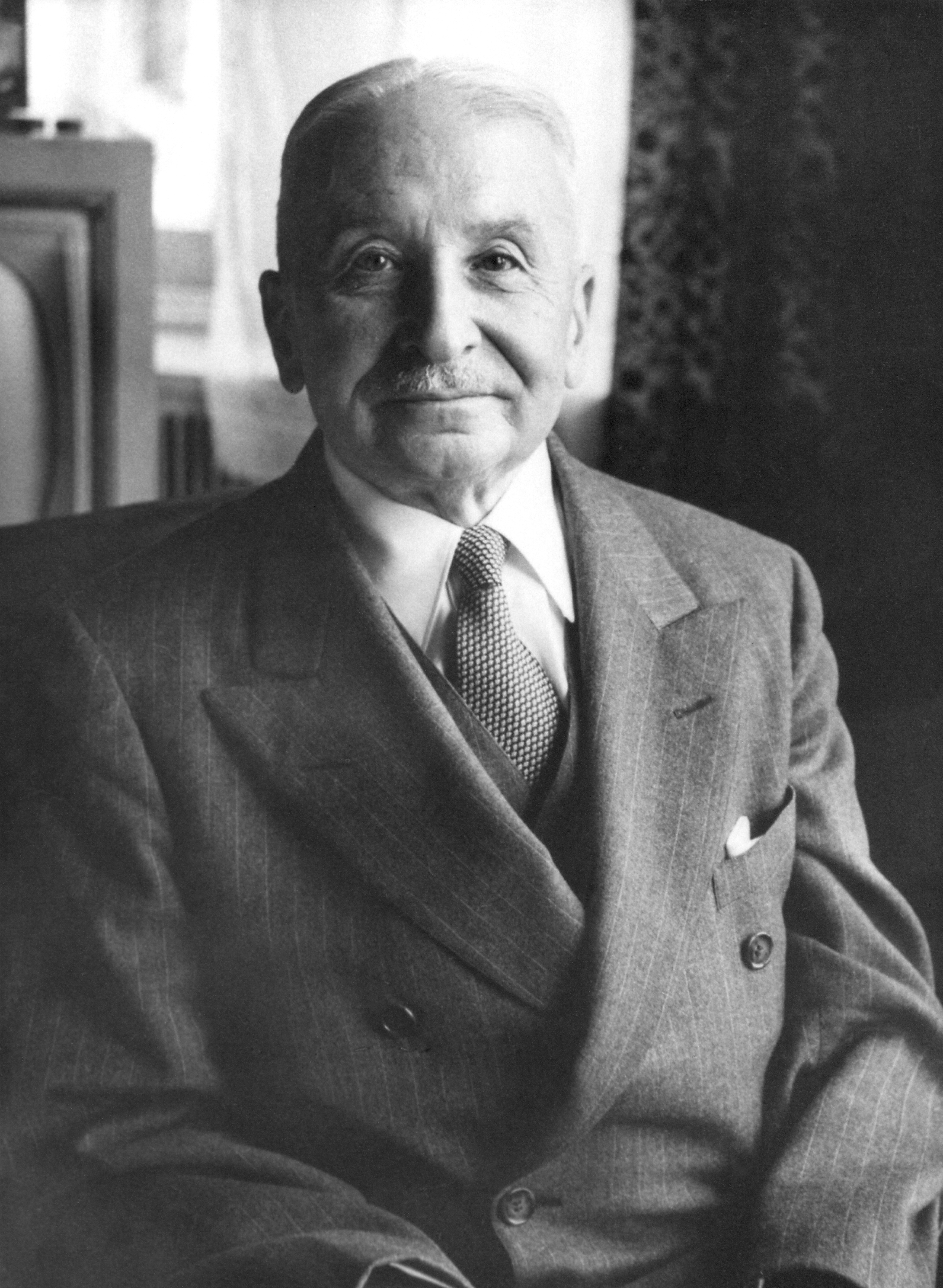
Frases célebres de Ludwig von Mises
Frases de hombres de Ludwig von Mises
Gobierno y sociedad civil
Variadas
Frases de vejez de Ludwig von Mises
Variadas
Principios económicos
Ludwig von Mises Frases y Citas
Gobierno y sociedad civil
Principios económicos
Ludwig von Mises libro La acción humana
Principios económicos
Fuente: La acción humana
Variadas
Ludwig von Mises libro La acción humana
Principios económicos
Fuente: La accion humana
Variadas
Gobierno y sociedad civil
Ludwig von Mises: Frases en inglés
Ludwig von Mises libro Liberalism
Fuente: Liberalism (1927), Ch. 1 : The Foundations of Liberal Policy § 10 : The Argument of Fascism
Contexto: Repression by brute force is always a confession of the inability to make use of the better weapons of the intellect — better because they alone give promise of final success. This is the fundamental error from which Fascism suffers and which will ultimately cause its downfall. The victory of Fascism in a number of countries is only an episode in the long series of struggles over the problem of property. The next episode will be the victory of Communism. The ultimate outcome of the struggle, however, will not be decided by arms, but by ideas. It is ideas that group men into fighting factions, that press the weapons into their hands, and that determine against whom and for whom the weapons shall be used. It is they alone, and not arms, that, in the last analysis, turn the scales.
So much for the domestic policy of Fascism. That its foreign policy, based as it is on the avowed principle of force in international relations, cannot fail to give rise to an endless series of wars that must destroy all of modern civilization requires no further discussion. To maintain and further raise our present level of economic development, peace among nations must be assured. But they cannot live together in peace if the basic tenet of the ideology by which they are governed is the belief that one's own nation can secure its place in the community of nations by force alone.
It cannot be denied that Fascism and similar movements aiming at the establishment of dictatorships are full of the best intentions and that their intervention has, for the moment, saved European civilization. The merit that Fascism has thereby won for itself will live on eternally in history. But though its policy has brought salvation for the moment, it is not of the kind which could promise continued success. Fascism was an emergency makeshift. To view it as something more would be a fatal error.


