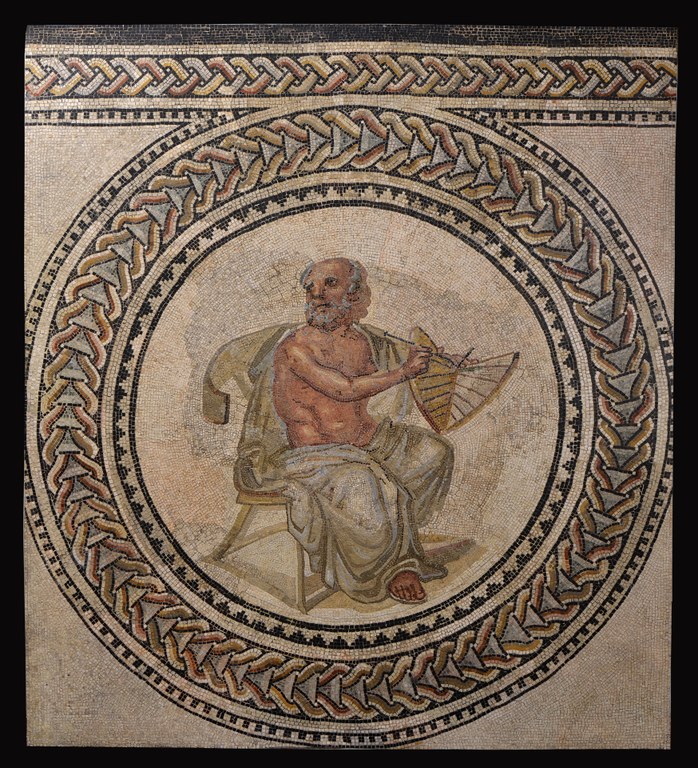
Frases de Anaximandro

Anaximandro [2]​ fue un filósofo y geógrafo de la Antigua Grecia. Discípulo y continuador de Tales,[3]​[4]​ además compañero y maestro de Anaxímenes, consideró que el principio de todas las cosas es lo ápeiron.[5]​

Se le atribuye solo un libro, conocido con el título Sobre la Naturaleza.[6]​ El libro se ha perdido y su palabra ha llegado a la actualidad mediante comentarios doxográficos de otros autores.[7]​ Se le atribuye también una carta terrestre, la medición de los solsticios y equinoccios por medio de un gnomon, trabajos para determinar la distancia y tamaño de las estrellas y la afirmación de que la Tierra es cilíndrica y ocupa el centro del universo.[5]​[8]​ Wikipedia  

✵ 610 a.C. – 547 a.C.
Anaximandro Foto
Anaximandro: 4 citas0 Me gusta

Anaximandro Frases y Citas

Esta traducción está esperando su revisión. ¿Es correcto?

Anaximandro: Frases en inglés

“All things must in equity again decline into that whence they have their origin for they must give satisfaction and atonement for injustice each in the order of time.”

Anaximander libro On Nature

On Nature, as quoted by Friedrich Ueberweg, History of Philosophy, from Thales to the Present Time (1885) Vol. 1, p. 35. https://books.google.com/books?id=BW5YAAAAMAAJ&pg=PA35

“There cannot be a single, simple body which is infinite, either, as some hold, one distinct from the elements, which they then derive from it, nor without this qualification.”

Anaximander

As quoted in Physics by Aristotle, as translated by John Burnet http://www.classicpersuasion.org/pw/burnet/egp.htm?pleaseget=14 <br class="br">Contexto: There cannot be a single, simple body which is infinite, either, as some hold, one distinct from the elements, which they then derive from it, nor without this qualification. For there are some who make this (i. e. a body distinct from the elements) the infinite, and not air or water, in order that the other things may not be destroyed by their infinity. They are in opposition one to another — air is cold, water moist, and fire hot—and therefore, if any one of them were infinite, the rest would have ceased to be by this time. Accordingly they say that what is infinite is something other than the elements, and from it the elements arise.

Autores similares

Diógenes de Sinope Foto
Diógenes de Sinope19
filósofo griego None
Epicteto Foto
Epicteto46
filósofo estoico griego None
Sócrates Foto
Sócrates85
filósofo griego clásico ateniense None
Jenofonte Foto
Jenofonte9
historiador y militar griego None
Zenón de Citio Foto
Zenón de Citio7
filósofo de la antigua Grecia, fundador del estoicismo None
Galeno de Pérgamo Foto
Galeno de Pérgamo1
médico griego de la antigüedad nacido en Pérgamo None
Antístenes Foto
Antístenes7
filósofo griego None
Epicuro Foto
Epicuro44
filósofo griego None
Pitágoras Foto
Pitágoras53
filósofo y matemático griego None
Safo Foto
Safo9
poetisa griega. None