Frases de Baba Hari Dass

Baba Hari Dass , born in Almora near Nainital, Uttar Pradesh , India, was a yoga master, a silent monk, and a commentator of Indian scriptural tradition of Dharma and Moksha. He was classically trained in Ashtanga Yoga – Raja Yoga of Patanjali , as well as Kriya Yoga, Ayurveda, Samkhya, Tantra Yoga, Vedanta, and Sanskrit.

Born into the 13th generation of a Kumaoni Karnatak Brahmin lineage, in the lunar month of Chaitra, in Shukla Paksha , he belonged to a traditional family and was one of several siblings [2]. He was an author, playwright, martial arts teacher, sculptor and builder of temples. Upon his arrival in the US in the early 1971, he and his teachings inspired the creation of several yoga centers and retreat programs in California and in Canada. His extensive literary output includes scriptural commentaries to Yoga Sutras of Patanjali, Srimad Bhagavad Gita, Samkhya Karika, and Vedanta, collections of wisdom aphorisms about the meaning and purpose of life, essays, plays, short stories, children's stories, kirtan mantras, and in-depth instructional yoga materials that form the basis of a yoga certification-training program.He was an early proponent of Ayurveda in the United States, an ancient Indian system of health and healing. In an annual rendition of Indian classic Ramayana, he taught performing arts, choreography and costume making. With the emphasis on selfless service that guided his life and action that benefits the world, he devoted himself to helping others and in 1987 he opened Sri Ram Orphanage in Haridwar for homeless children in India. Although he did not speak, he was conversant in several languages in writing.

To the local population of Nainital and Almora, Baba Hari Dass was also known as Haridas , as Haridas Baba, as Chota Maharaji , or as Harda Baba. Baba Hari Dass of Almora-Nainital is a different person than Swami Haridas who was a spiritual poet and classical musician of Bhakti movement era. Also, Haridas was a known saint of clan from Delhi whose temple exists in Jharoda Kalan village, in Najafgarh. Wikipedia  

✵ 26. marzo 1923 – 25. septiembre 2018
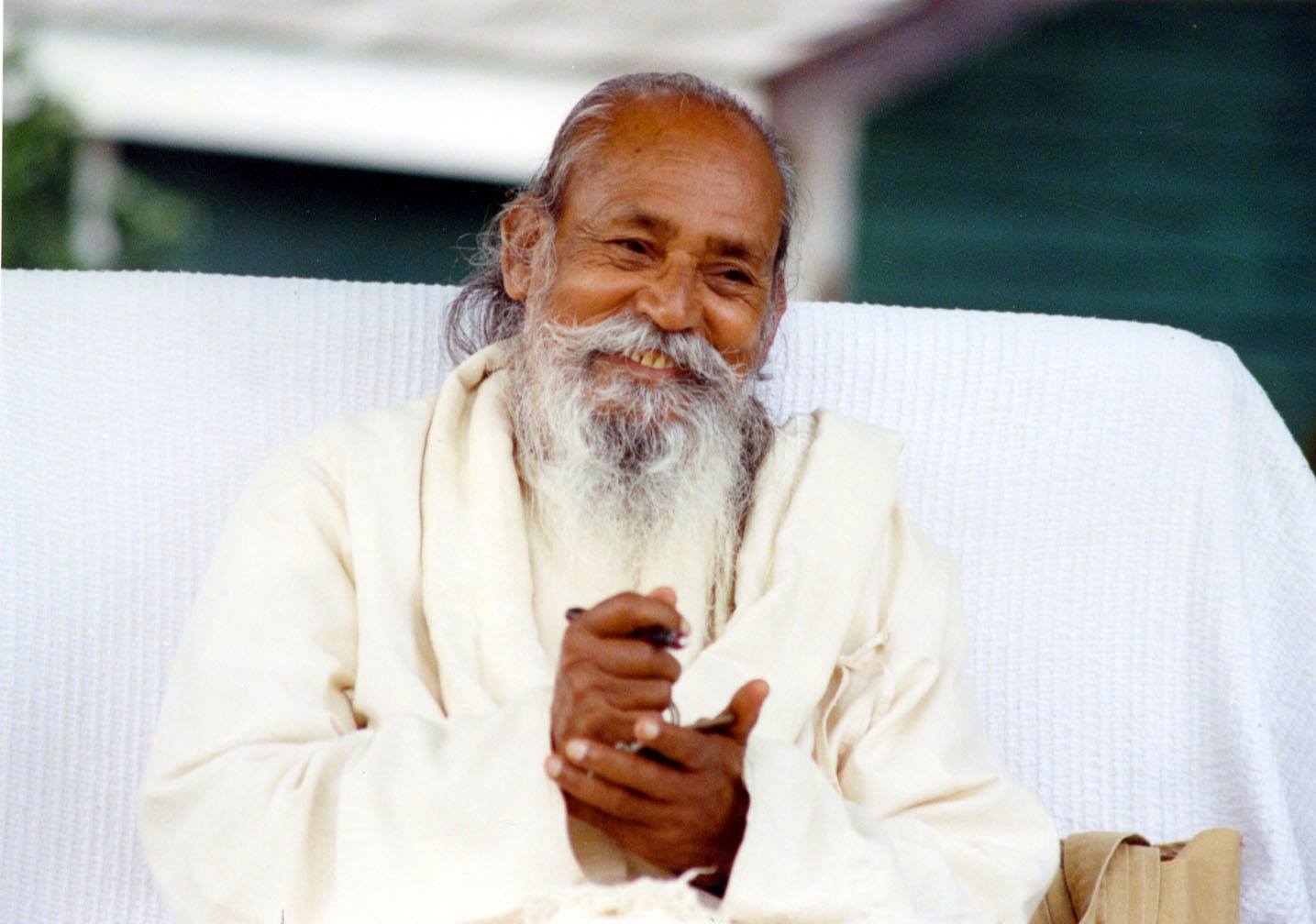
Baba Hari Dass Foto
Baba Hari Dass: 72   frases 4   Me gusta

Baba Hari Dass: Frases en inglés

“The only thing necessary is to understand attachment”

Everyday Peace: Letters for Life, 2000
Contexto: You have everything and you want more. It's natural in human beings. You don't need to give away your house, money, and car, and leave your family to find God. The only thing necessary is to understand attachment. (p.17)

“When happiness moves beyond the mind, that is happiness”

Miscellaneous
Contexto: Q: How are peace and happiness related? Is peace the only real happiness? A: When happiness moves beyond the mind, that is happiness. (March 26, 2016)

“Using siddhis (powers) is not good for those who possess them. It can also trap the mind into desires.”

The Yellow Book, 1974
Contexto: Using siddhis (powers) is not good for those who possess them. It can also trap the mind into desires. By being pure in mind siddhis will come by itself, and a yogi should not try to show his powers. First thing is to have siddhis and then not to get trapped in siddhis. (p.42)

“Samyama, which is the application of concentration (dharana), meditation (dhyana), and superconscious trance (samadhi) in lightning succession, is practiced with the intent to gain specific knowledge of the object of concentration”

The Yoga Sutras of Patanjali, Book III, 2013
Contexto: Samyama, which is the application of concentration (dharana), meditation (dhyana), and superconscious trance (samadhi) in lightning succession, is practiced with the intent to gain specific knowledge of the object of concentration. The object is seen from all sides, in all its aspects, with full depth and breadth. As such, this complete absorption of the mind using the process of samyama brings complete and specific knowledge of the object. This power of knowing is vibhuti. (Bk. III, Sutra 4, p.7)

“The mind is the main instrument to gain enlightenment, but enlightenment is only reached when the mind stops. Q: How can we stop the mind? A: Not hitting it with a hammer. Stop the mind by the mind”

Silence Speaks, from the chalkboard of Baba Hari Dass, 1977
Contexto: Q: Can intellect aid understanding? A: It helps in the beginning but cannot give full enlightenment. The mind is the main instrument to gain enlightenment, but enlightenment is only reached when the mind stops. Q: How can we stop the mind? A: Not hitting it with a hammer. Stop the mind by the mind. (p.31)

“The ego rules the mind because it links the “I” with the mind and body”

The Yoga Sutras of Patanjali, Book II, 2008
Contexto: The ego rules the mind because it links the “I” with the mind and body. If the “I,” which is another name for the self, were not identified with the mind and body, the ego would have no power. Self-study [svadhyaya], therefore, is the set of practices that investigates the nature of the self to discover its origin. When the origin is found to be separate from the body, the ego loses the battle and peace is attain. (Bk. II, Sutra 1, p.5)

“Yoga is therefore both the process of nirodha and the unqualified state of niruddha (the perfection of that process)”

The Yoga Sutras of Patanjali, Book I, 1999
Contexto: Yoga is defined as a method – the process of nirodha (mental control) – by which union (the goal of yoga) is achieved. Yoga is therefore both the process of nirodha and the unqualified state of niruddha (the perfection of that process). The word yoga (union) implies duality (as in joining of two things or principles); the result of yoga is the nondual state..., or as the union of the lower self and higher Self. The nondual state is characterized by the absence of individuality; it can be described as eternal peace, pure love, Self-realization, or liberation. (Sutra 2, Bk I, p.5)

“A wise person is one who sees the effect of an action before he acts.”

Fuente: Fire without Fuel - The Aphorisms of Baba Hari Dass, 1986, p.41

“Faith and devotion are the foundation on which meditation is built.”

Fuente: Ashtanga Yoga Primer, 1981, p.27

“If the ego is pulled toward the world, it makes a wall. If the same ego is pulled toward God, it makes a ladder”

Miscellaneous
Contexto: Control of the mind can be achieved by understanding yourself, the aim and the energy which is blocking us from progressing. Between God and the Self, the blocking energy is the ego. If the ego is pulled toward the world, it makes a wall. If the same ego is pulled toward God, it makes a ladder.

“Yoga is defined as a method – the process of nirodha”

The Yoga Sutras of Patanjali, Book I, 1999
Contexto: Yoga is defined as a method – the process of nirodha (mental control) – by which union (the goal of yoga) is achieved. Yoga is therefore both the process of nirodha and the unqualified state of niruddha (the perfection of that process). The word yoga (union) implies duality (as in joining of two things or principles); the result of yoga is the nondual state..., or as the union of the lower self and higher Self. The nondual state is characterized by the absence of individuality; it can be described as eternal peace, pure love, Self-realization, or liberation. (Sutra 2, Bk I, p.5)

“Anything that exists will never be destroyed; its disappearance is simply a transformation.”

Fuente: Fire without Fuel - The Aphorisms of Baba Hari Dass, 1986, p.18

“The nondual state is characterized by the absence of individuality; it can be described as eternal peace, pure love, Self-realization, or liberation”

The Yoga Sutras of Patanjali, Book I, 1999
Contexto: Yoga is defined as a method – the process of nirodha (mental control) – by which union (the goal of yoga) is achieved. Yoga is therefore both the process of nirodha and the unqualified state of niruddha (the perfection of that process). The word yoga (union) implies duality (as in joining of two things or principles); the result of yoga is the nondual state..., or as the union of the lower self and higher Self. The nondual state is characterized by the absence of individuality; it can be described as eternal peace, pure love, Self-realization, or liberation. (Sutra 2, Bk I, p.5)

“A person knows what he knows. An animal knows, but doesn't know what he knows”

Fire without Fuel - The Aphorisms of Baba Hari Dass, 1986
Contexto: A person knows what he knows. An animal knows, but doesn't know what he knows. In Yoga, "I" consciousness is called asmita klesha. It is classified as an affliction and a hindrance to attaining higher consciousness. There is always a chance for a person to break out of the cycle, but there is no such chance for an animal unless it incarnates as a human and develops "I" consciousness. (p.36-7)

Autores similares

John Katzenbach Foto
John Katzenbach 142
escritor estadounidense
Jack London Foto
Jack London 22
escritor estadounidense
Francis Scott Fitzgerald Foto
Francis Scott Fitzgerald 98
escritor estadounidense
Allen Ginsberg Foto
Allen Ginsberg 3
poeta beat estadounidense
Ozzy Osbourne Foto
Ozzy Osbourne 9
cantante y compositor británico
Jiddu Krishnamurti Foto
Jiddu Krishnamurti 30
Filósofo espiritual hindú
Paul Samuelson Foto
Paul Samuelson 23
economista estadounidense
Meryl Streep Foto
Meryl Streep 14
Actriz estadounidense
George Harrison Foto
George Harrison 18
músico británico