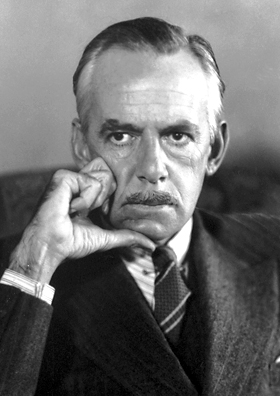
Obras
Dynamo
Eugene O'NeillA Electra le sienta bien el luto
Eugene O'NeillA Moon for the Misbegotten
Eugene O'NeillDynamo
Eugene O'NeillA Electra le sienta bien el luto
Eugene O'NeillA Moon for the Misbegotten
Eugene O'NeillFrases célebres de Eugene O'Neill
“El amor nunca tiene razones, y la falta del amor tampoco. Todo son milagros.”
Antes del desayuno (Before Breakfast), 1916
“Esperar que los otros juzguen con sentido común es una prueba del que nos falta a nosotros.”
Fuente: Noticias de la semana, números 732-744. Editorial Perfil, 1991. Procedencia del original: Universidad de Texas. Digitalizado: 19 de noviembre de 2008, p. 71.
Eugene O'Neill A Electra le sienta bien el luto
A Electra le sienta bien el luto (Mourning Becomes Electra), 1931 <br class="br">Fuente: Contenido de la obra. http://www.ibdb.com/show.php?id=6266.
“Creer en el sentido común es la primer falta de sentido común.”
Dinamo (Dynamo), 1929
“Con las personas que no puedes amar, muéstrate siempre amablemente evasivo.”
Eugene O'Neill A Moon for the Misbegotten
Una luna para el bastardo (A Moon for the Misbegotten), 1943
Eugene O'Neill: Frases en inglés
“There is no present or future-only the past, happening over and over again-now.”
Eugene O'Neill A Moon for the Misbegotten
Fuente: A Moon for the Misbegotten
Eugene O'Neill Long Day's Journey into Night
Page 106 (Act 3)
Long Day's Journey into Night (1955)
Eugene O'Neill The Hairy Ape
Mildred: Scene 2
The Hairy Ape (1922)
John: Act 3, Scene 2.
Days Without End (1933)
Contexto: I listen to people talking about this universal breakdown we are in and I marvel at their stupid cowardice. It is so obvious that they deliberately cheat themselves because their fear of change won't let them face the truth. They don't want to understand what has happened to them. All they want is to start the merry-go-round of blind greed all over again. They no longer know what they want this country to be, what they want it to become, where they want it to go. It has lost all meaning for them except as pig-wallow. And so their lives as citizens have no beginnings, no ends. They have lost the ideal of the Land of the Free. Freedom demands initiative, courage, the need to decide what life must mean to oneself. To them, that is terror. They explain away their spiritual cowardice by whining that the time for individualism is past, when it is their courage to possess their own souls which is dead — and stinking! No, they don't want to be free. Slavery means security — of a kind, the only kind they have courage for. It means they need not to think. They have only to obey orders from owners who are, in turn, their slaves!
John: Act 3, Scene 2.
Days Without End (1933)
Contexto: I listen to people talking about this universal breakdown we are in and I marvel at their stupid cowardice. It is so obvious that they deliberately cheat themselves because their fear of change won't let them face the truth. They don't want to understand what has happened to them. All they want is to start the merry-go-round of blind greed all over again. They no longer know what they want this country to be, what they want it to become, where they want it to go. It has lost all meaning for them except as pig-wallow. And so their lives as citizens have no beginnings, no ends. They have lost the ideal of the Land of the Free. Freedom demands initiative, courage, the need to decide what life must mean to oneself. To them, that is terror. They explain away their spiritual cowardice by whining that the time for individualism is past, when it is their courage to possess their own souls which is dead — and stinking! No, they don't want to be free. Slavery means security — of a kind, the only kind they have courage for. It means they need not to think. They have only to obey orders from owners who are, in turn, their slaves!
Fuente: The Great God Brown and Other Plays
Eugene O'Neill Long Day's Journey into Night
Page 63 (Act 2, Scene 1)
Long Day's Journey into Night (1955)
Fuente: Long Day's Journey Into Night
Contexto: But I suppose life has made him like that, and he can't help it. None of us can help the things life has done to us. They're done before you realize it, and once they're done they make you do other things until at last everything comes between you and what you'd like to be, and you've lost your true self forever.
“Man is born broken. He lives by mending. The grace of God is glue!”
Eugene O'Neill The Great God Brown
Act 4, Scene 1
The Great God Brown (1926)
“We are such things as rubbish is made of, so let's drink up and forget it.”
Eugene O'Neill Long Day's Journey into Night
Fuente: Long Day's Journey Into Night
Eugene O'Neill The Iceman Cometh
Fuente: The Iceman Cometh
Eugene O'Neill Long Day's Journey into Night
Page 100-101 (Act 3)
Long Day's Journey into Night (1955)
Fuente: Long Day's Journey Into Night
Eugene O'Neill Long Day's Journey into Night
Page 107 (Act 3)
Long Day's Journey into Night (1955)
“Yes, I remember. I fell in love with James Tyrone and was so happy for a time”
Eugene O'Neill Long Day's Journey into Night
Page 179
Long Day's Journey into Night (1955)
Eugene O'Neill Long Day's Journey into Night
Act 4 http://books.google.com/books?id=YI8iwzZhl6AC&q=%22what+the+hell+was+it+I+wanted+to+buy+I+wonder+that+was+worth+well+no+matter+it's+a+late+day+for+regrets%22&pg=PT133#v=onepage <br class="br">Long Day's Journey into Night (1955)
Eugene O'Neill Long Day's Journey into Night
Fuente: Long Day's Journey into Night (1955), Page 76 (Act 2, Scene 1)
Eugene O'Neill Beyond the Horizon
Robert: Act 3, Scene 2
Beyond the Horizon (1918)
“Don't cry. The damned don't cry.”
Page 253.
Mourning Becomes Electra (1931)
Loving: Act 3, Scene 1.
Days Without End (1933)
Eugene O'Neill Long Day's Journey into Night
Page 104 (Act 3)
Long Day's Journey into Night (1955)
“One may not give one's soul to a devil of hate — and remain forever scatheless.”
Father Baird: Act 3, Scene 1.
Days Without End (1933)
“It has been a long day. Why don't you sleep now—as you used to, remember?—for a little while.”
Eugene O'Neill Strange Interlude
Act 9 http://books.google.com/books?id=q6JEAAAAYAAJ&q=%22It+has+been+a+long+day+Why+don't+you+sleep+now+as+you+used+to+remember+for+a+little+while%22&pg=PA200#v=onepage <br class="br">Strange Interlude (1928)
Eugene O'Neill The Hairy Ape
Paddy: Scene 1
The Hairy Ape (1922)


