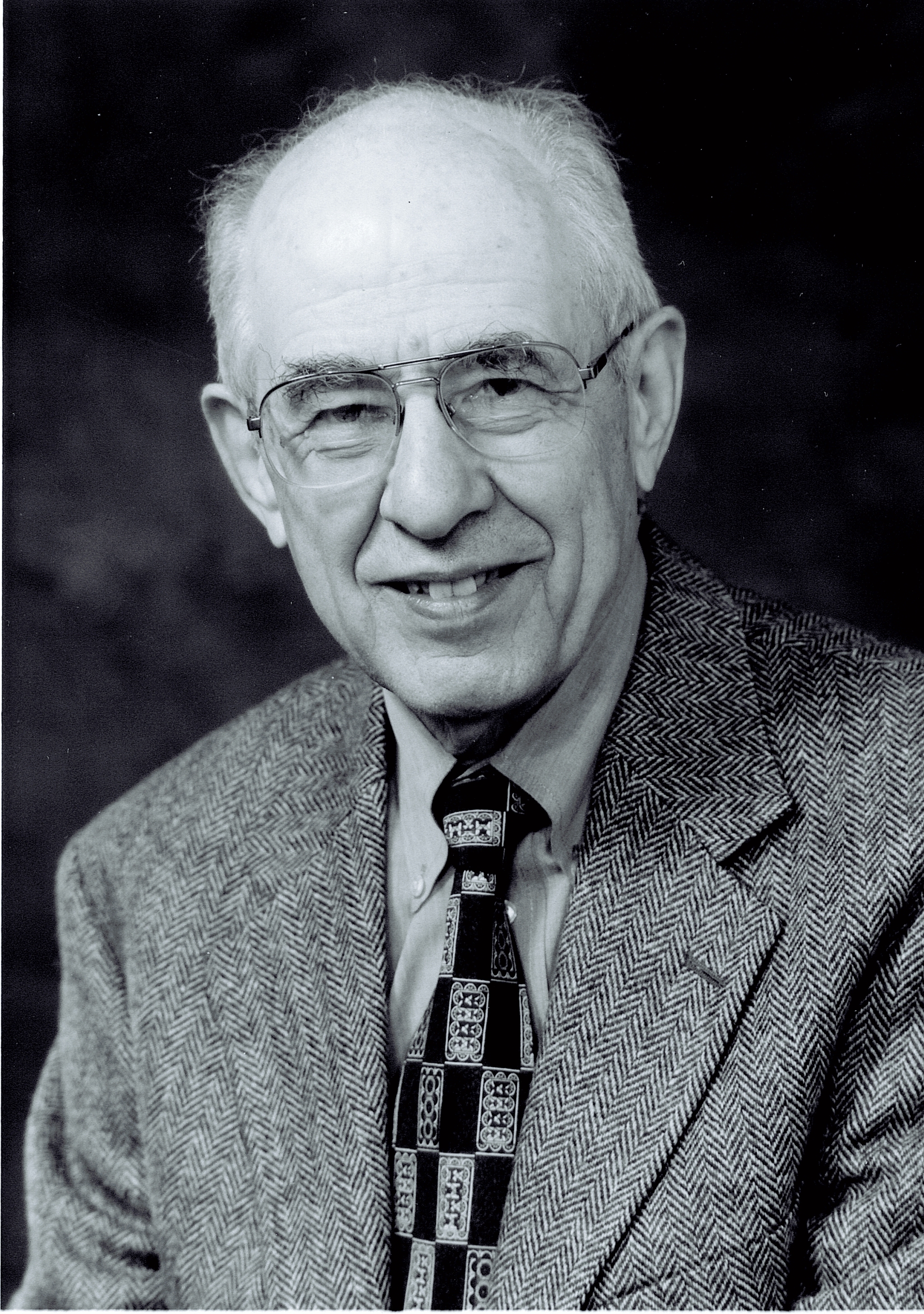
Frases de Hilary Putnam

Hilary Whitehall Putnam [1]​ fue un filósofo, matemático e informático teórico estadounidense. Hizo aportaciones interesantes a la filosofía de la mente, la filosofía del lenguaje, la filosofía de la ciencia y el pragmatismo.[2]​ Fue conocido por aplicar un alto grado de escrutinio a sus propias teorías filosóficas, a las cuales sometía a un riguroso análisis hasta encontrar sus puntos flacos.[3]​ Como consecuencia de ello, adquirió la reputación de cambiar con cierta frecuencia la postura que defendía.[4]​

En el campo de la filosofía de la mente, Putnam es famoso por su hipótesis de la realizabilidad múltiple y por el concepto de funcionalismo, una influyente teoría relacionada con el problema mente cuerpo.[2]​[5]​ En filosofía del lenguaje desarrolló, junto con Saul Kripke y otros, la teoría causal de la referencia y formuló una teoría del significado propia, inventando la noción de externalismo semántico, basada en un famoso experimento mental llamado Tierra Gemela.[6]​

En lo referente a la filosofía de las matemáticas, él y su mentor W. Quine elaboraron el «argumento de indispensabilidad», que se aplica a la realidad de las entidades matemáticas.[7]​ Más tarde Putnam expuso la teoría de que las matemáticas no son puramente lógicas, sino «cuasiempíricas».[8]​ En la disciplina de la epistemología es conocido por expandir la teoría de Jonathan Dancy acerca del cerebro en una cubeta, de modo tal que cuestiona el escepticismo epistemológico.[6]​

En metafísica apoyó la postura del realismo metafísico, aunque posteriormente se convirtió en uno de sus mayores críticos, primero adoptando el «realismo interno»,[9]​ que más tarde abandonó en favor un realismo directo de corte pragmatista. El realismo directo de Putnam, que tiene como objetivo el estudio metafísico de la forma en que las personas experimentan el mundo, rechaza la idea de las representaciones mentales y otros tipos de intermediarios entre la mente y el mundo.[10]​

Más allá de la filosofía, Putnam ha contribuido a las matemáticas y la informática. Desarrolló, junto con Martin Davis, el algoritmo de Davis-Putnam para el problema de satisfacibilidad booleana,[11]​ y ayudó a demostrar la irresolubilidad del décimo problema de Hilbert.[12]​ El filósofo fue en ciertos períodos una polémica figura política, especialmente por su relación con el Partido Laboral Progresista de Estados Unidos a finales de los años 60 y principios de los 70.[13]​[14]​ Wikipedia  

✵ 31. julio 1926 – 13. marzo 2016
Hilary Putnam Foto
Hilary Putnam: 8 citas0 Me gusta

Hilary Putnam: Frases en inglés

“What we are left with, if what I have said so far is right, is a conclusion that I initially found very distressing: either GRW or some successor, or else Bohm or some successor, is the correct interpretation—or, to include a third possibility to please Itamar Pitowski, we will just fail to find a scientific realist interpretation which is acceptable.”

Hilary Putnam

And the ghost of Bohr will laugh, and say, ‘I told you all along that the human mind cannot produce a realist interpretation of quantum mechanics’!
"A philosopher looks at quantum mechanics (again)", Brit. J. Phil. Sci. 56 (2005), 615–634

“The real significance of the Russell paradox, from the standpoint of the modal-logic picture, is this: it shows that no concrete structure can be a standard model for the naive conception of the totality of all sets; for any concrete structure has a possible extension that contains more 'sets.'”

Hilary Putnam

"Mathematics without foundations"
Fuente: Philosophical Papers Volume 1: Mathematics, Matter, and Method (1975, 1979)
Contexto: (If we identify sets with the points that represent them in the various possible concrete structures, we might say: it is not possible for all possible sets to exist in any one world!) Yet set theory does not become impossible. Rather, set theory becomes the study of what must hold in, e.g. any standard model for Zermelo set theory.

“It is evident that Feyerabend is misusing the term 'meaning.'”

Hilary Putnam

He is not alone in such misuse: in the last thirty years, misusing the term 'meaning' has been one of the most common, if least successful, ways of 'establishing' philosophical propositions. But how did this distressing state of affairs come to be? The blame must be placed squarely upon the Logical Positivists. The 'Verifiability Theory of Meaning' ('the meaning of a sentence is its method of verification') was, from the first, nothing but a persuasive redefinition. If to call metaphysical propositions 'meaningless' were only to assert that these propositions are empirically untestable, it would be harmless (the metaphysicians always said that their assertions were neither empirically testable nor tautologies); but, of course, it is not harmless, because the Positivist hopes that we will accept his redefinition of the term 'meaning,' while retaining the pejorative connotations of being 'meaningless' in the customary {linguistic) sense, i.e. being literally without sense.
"How not to talk about meaning" (1965)
Philosophical Papers Volume 2: Mind, Language and Reality (1975)

Autores similares

Emil Cioran Foto
Emil Cioran80
filósofo y ensayista rumano None
Umberto Eco Foto
Umberto Eco132
escritor y filósofo italiano None
Hannah Arendt Foto
Hannah Arendt12
filósofa política alemana y posteriormente estadounidense None
José Ortega Y Gasset Foto
José Ortega Y Gasset179
filósofo y ensayista español None
Ayn Rand Foto
Ayn Rand370
filósofa y escritora estadounidense None
Henri Bergson Foto
Henri Bergson14
escritor y filósofo irracionalista francés None
Simone Weil Foto
Simone Weil31
Filósofa francesa, activista social, mística cristiana None
Martin Heidegger Foto
Martin Heidegger21
filósofo alemán None
Jean Paul Sartre Foto
Jean Paul Sartre131
filósofo, escritor y activista francés None
Martin Buber Foto
Martin Buber5
Filósofo y escritor judío. None