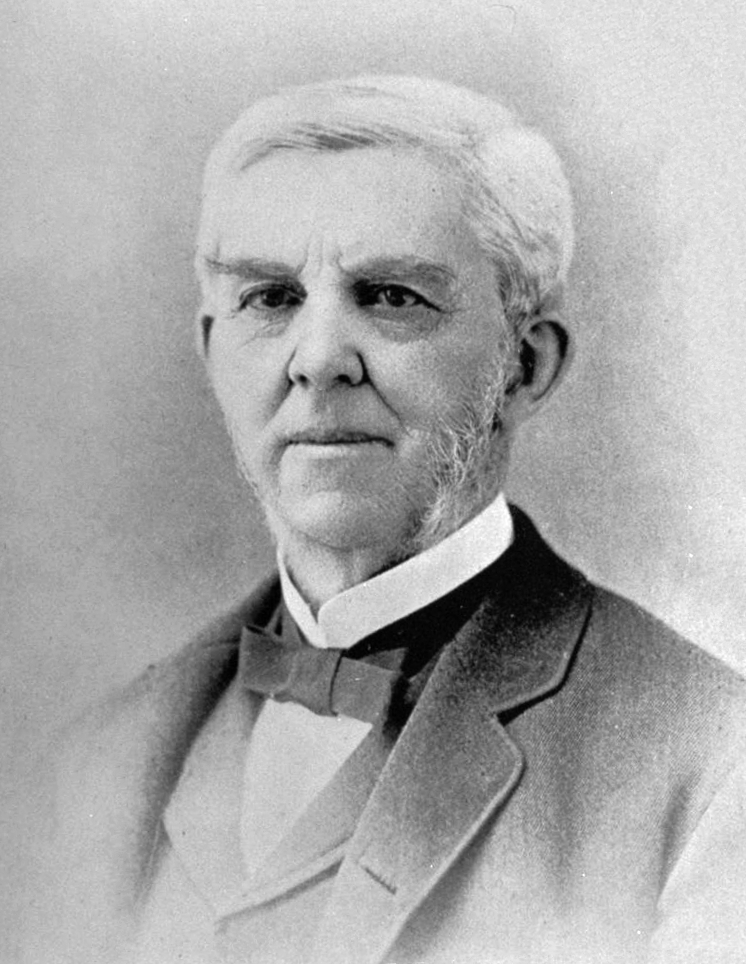
Frases célebres de Oliver Wendell Holmes
Oliver Wendell Holmes Frases y Citas
“Aquello que sale del corazón, lleva el matiz y el calor de su lugar de origen.”
Variante: Aquello que sale del corazón, lleva el matiz y el calor de su lugar de origen.
Oliver Wendell Holmes: Frases en inglés
Fuente: The Poet at the Breakfast Table (1872), Ch. 1, p. 1 The Writings of Oliver Wendell Holmes, Vol. 3 https://books.google.com/books?id=Rx9EAAAAYAAJ (1892)
The Voiceless; reported in Bartlett's Familiar Quotations, 10th ed. (1919).
“Thine eye was on the censer,
And not the hand that bore it.”
Lines by a Clerk; reported in Bartlett's Familiar Quotations, 10th ed. (1919).
The Autocrat of the Breakfast Table (1858)
Holmes attributed the remark "Good Americans, when they die, go to Paris" to "one of the wittiest of men". Later writers have attributed the saying to friend and fellow Saturday Club member Thomas Gold Appleton. In 1859, Ralph Waldo Emerson, also a member of that club, recorded in one of his journals, "T. Appleton says, that he thinks all Bostonians, when they die, if they are good, go to Paris." Emerson in His Journals, ed. Joel Porte (1982), p. 486. Neither sentence has been found in the published writings of Appleton, but the remark may have been made in the presence of Holmes and Emerson. Oscar Wilde used the Holmes version in The Picture of Dorian Gray (1890), p. 75 (Complete Works, vol. 4, 1923), and A Woman of No Importance (1893), p. 180 (Complete Works, vol. 7, 1923).
The Autocrat of the Breakfast Table (1858)
How not to settle it; reported in Bartlett's Familiar Quotations, 10th ed. (1919).
A Mortal Antipathy (1885) This statement is often misquoted as "Love is the master-key that opens the gates of happiness".
Army Hymn; reported in Bartlett's Familiar Quotations, 10th ed. (1919).
The Autocrat of the Breakfast Table (1858)
"The Pilgrims of Plymouth" http://www.unz.org/Pub/BrainerdCephas-1901v02-00267 (Oration, December 22, 1855), in Cephas Brainerd and Eveline Warner Brainerd (eds), The New England Society Orations: Volume II. New York: The Century Co., 1901, p. 298.
“And silence, like a poultice, comes
To heal the blows of sound.”
To an Insect; reported in Bartlett's Familiar Quotations, 10th ed. (1919).
What we all think; reported in Bartlett's Familiar Quotations, 10th ed. (1919). Compare Browning, Paracelsus: "God! Thou art love! I build my faith on that".
Mechanism in thought and morals https://books.google.se/books?id=c5rOGqwLGaEC&lpg=PA47 : an address delivered before the Phi Beta Kappa Society of Harvard University, June 29, 1870 <br class="br">Mechanism in thought and morals (1871)
Earlier in the chapter Holmes says that all the comparisons and analogies ever made "would be but a cupful from the infinite ocean of similitudes and analogies that rolls through the universe".
The Autocrat of the Breakfast Table (1858)
The Autocrat of the Breakfast Table (1858)
The last Leaf; reported in Bartlett's Familiar Quotations, 10th ed. (1919).
"Poem", read at a dinner given for the author by the medical profession of the City of New York (April 12, 1883); reported in The Poetical Works of Oliver Wendell Holmes, ed. Eleanor M. Tilton (1895, rev. 1975), p. 71.
“And when you stick on conversation’s burrs,
Don't strew your pathway with those dreadful urs.”
A rhymed Lesson. Urania; reported in Bartlett's Familiar Quotations, 10th ed. (1919).
The Autocrat of the Breakfast Table (1858)
Fuente: The Professor at the Breakfast Table (1859), Ch. V.
“When the last reader reads no more.”
The last Reader; reported in Bartlett's Familiar Quotations, 10th ed. (1919).
“The world's great men have not commonly been great scholars, nor its great scholars great men.”
The Autocrat of the Breakfast Table (1858)
“And since, I never dare to write
As funny as I can.”
The Height of the Ridiculous; reported in Bartlett's Familiar Quotations, 10th ed. (1919).
The Autocrat of the Breakfast Table (1858)
“When lawyers take what they would give
And doctors give what they would take.”
Latterday Warnings; reported in Bartlett's Familiar Quotations, 10th ed. (1919).


