“Todos los pecados son intentos de llenar vacíos.”
Fuente: [Albaigès Olivart] e [Hipólito] (1997), p. 364.
Fuente: La pensateur et la grâce, 1975.
Simone Weil fue una filósofa francesa.
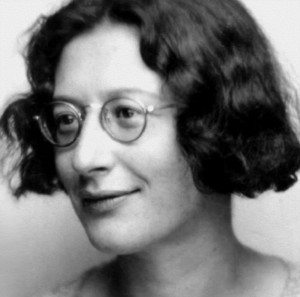
“Todos los pecados son intentos de llenar vacíos.”
Fuente: [Albaigès Olivart] e [Hipólito] (1997), p. 364.
Fuente: La pensateur et la grâce, 1975.
“Para que tu mano derecha ignore lo que hace la izquierda, habrá que esconderla de la conciencia.”
Fuente: [Albaigès Olivart] e [Hipólito] (1997), p. 259.
Fuente: [Albaigès Olivart] e [Hipólito] (1997), p. 195.
War and the Iliad
Fuente: [Albaigès Olivart] e [Hipólito] (1997), p.345 . Citado por W. H. Auden en A Certain World
Fuente: ¿Sería posible una vida sin partidos políticos? http://www.votoenblancocomputable.org/index.php/13-info/academic/54-apoyaria-simone-weil-a-escanos-en-blanco-en-busca-de-la-democracia-participativa
Simone Weil libro Réflexions sur les causes de la liberté et de l'oppression sociale
Réflexions sur les causes de la liberté et de l'oppression sociale, 1934
Fuente: [Albaigès Olivart] e [Hipólito] (1997), p. 364.
Fuente: Escritos históricos y políticos
Fuente: Sobre la ciencia (citando La ciencia y la hipótesis de Poincaré). <br class="br">Fuente: Weil, Simone. Edit. El cuenco de plata, 2006; pág. 16 https://books.google.es/books?id=LaM2DNTfMDcC&pg=PA30&dq=No+hay+nada+m%C3%A1s+c%C3%B3modo+que+no+pensar.+simone+weil&hl=es&sa=X&ved=0ahUKEwjnyYvLif7mAhXZBGMBHUljDlwQ6AEIOTAC#v=onepage&q=c%C3%B3modo&f=false; ISBN 9871228244. <br class="br">Fuente: La Science et l'hypothèse ( La ciencia y la hipótesis), París, Flammarion 1902. Madrid, Espasa, 2002.
“El deseo es un anhelo del pensamiento hacia el porvenir.”
Fuente: [Señor] (1997), p. 139.
Simone Weil libro The Need for Roots
Fuente: [Albaigès Olivart] e [Hipólito] (1997), p. 125.
Fuente: The need for roots
“La desgracia de los otros entró en mi carne.”
Fuente: Gamoneda, Antonio. Blues castellano (1961-1966). 1.ª ed. Aeda, colección de poesía; editorial Noega, Gijón, 1982; ISBN 8486015057. Página 9.
Fuente: [Albaigès Olivart] e [Hipólito] (1997), p. 589.
Fuente: La pensateur et la grâce, 1975.
Selección de reflexiones y postulados
Fuente: [Albaigès Olivart] e [Hipólito] (1997), p. 143.
Du pouvoir de transformer un homme en chose en le faisant mourir procède un autre pouvoir, et bien autrement prodigieux, celui de faire une chose d'un homme qui reste vivant.
in The Simone Weil Reader, p. 155
Simone Weil : An Anthology (1986), The Iliad or The Poem of Force (1940-1941)
“There is a certain kind of morality which is even more alien to good and evil than amorality is.”
“The responsibility of writers,” p. 169
On Science, Necessity, and the Love of God (1968)
“Liberty, taking the word in its concrete sense, consists in the ability to choose.”
Fuente: Simone Weil : An Anthology (1986), The Needs of the Soul (1949), Ch. 3, Liberty
Fuente: Simone Weil : An Anthology (1986), Chance (1947), p. 277
Last Notebook (1942) p. 84
First and Last Notebooks (1970)
Fuente: Simone Weil : An Anthology (1986), The Needs of the Soul (1949), p. 103
Simone Weil libro Gravity and Grace
Fuente: Gravity and Grace (1947), p. 129 (1972 edition)
Fuente: Simone Weil : An Anthology (1986), Attention and Will (1947), p. 216
As quoted in the Introduction (by Siân Miles)
Fuente: Simone Weil : An Anthology (1986), p. 35
Fuente: Simone Weil : An Anthology (1986), Human Personality (1943), p. 63
Fuente: Lectures on Philosophy (1959), p. 87
Fuente: Lectures on Philosophy (1959), p. 76
Fuente: Simone Weil : An Anthology (1986), Human Personality (1943), p. 68
Fuente: Simone Weil : An Anthology (1986), Chance (1947), p. 277
“I also am other than what I imagine myself to be. To know this is forgiveness.”
Fuente: Simone Weil : An Anthology (1986), Void and Compensation (1947), p. 200
“It is not religion but revolution which is the opium of the people.”
Simone Weil libro Gravity and Grace
Fuente: Gravity and Grace (1947), p. 159 (1972 edition)
Simone Weil libro Gravity and Grace
Fuente: Gravity and Grace (1947), p. 140 (1972 edition)
Simone Weil libro Gravity and Grace
Croire qu’on s’élève parce qu’en gardant les mêmes bas penchants (exemple : désir de l’emporter sur autrui) on leur a donné des objets élevés. On s’élèverait au contraire en attachant à des objets bas des penchants élevés.
La pesanteur et la grâce (1948), p. 61
Fuente: Gravity and Grace (1947), p. 48 (1972 edition)
Waiting on God (1950), Reflections on the Right Use of School Studies with a View to the Love of God
Fuente: Simone Weil : An Anthology (1986), Detachment (1947), p. 258
Fuente: Simone Weil : An Anthology (1986), Detachment (1947), p. 260
First and Last Notebooks (1970)
Waiting on God (1950), Reflections on the Right Use of School Studies with a View to the Love of God
Fuente: Simone Weil : An Anthology (1986), The Power of Words (1937), p. 235
“Truth is sought not because it is truth but because it is good.”
Fuente: Simone Weil : An Anthology (1986), Attention and Will (1947), p. 213
Fuente: Simone Weil : An Anthology (1986), Love (1947), p. 274
Fuente: Simone Weil : An Anthology (1986), Human Personality (1943), p. 71
Fuente: Simone Weil : An Anthology (1986), The Power of Words (1937), p. 233
Fuente: Simone Weil : An Anthology (1986), The Power of Words (1937), p. 230
Simone Weil libro The Need for Roots
HTTP://BOOKS. GOOGLE. COM/books? id=zacmeILjLvIC&q=%22culture+as+we+know+it+is+an+instrument+manipulated+by+teachers+for+manufacturing+more+teachers+who+in+their+turn+will+manufacture+still+more+teachers%22&pg=PA65#v=onepage
La culture est un instrument manié par des professeurs pour fabriquer des professeurs qui à leur tour fabriqueront des professeurs.
http://books.google.com/books?id=33rE96fD8h8C&q=%22La+culture+est+un+instrument+mani%C3%A9+par+des+professeurs+pour+fabriquer+des+professeurs+qui+%C3%A0+leur+tour+fabriqueront+des+professeurs%22&pg=PA65#v=onepage
The Need for Roots, part 2: Uprootedness, chapter 1: Uprootedness in the Towns (1949)


