“Todos los pecados son intentos de llenar vacíos.”
Fuente: [Albaigès Olivart] e [Hipólito] (1997), p. 364.
Fuente: La pensateur et la grâce, 1975.
Simone Weil fue una filósofa francesa.
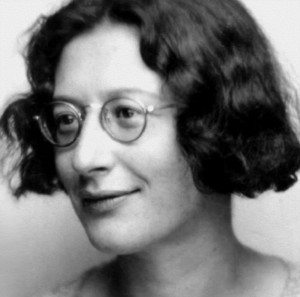
“Todos los pecados son intentos de llenar vacíos.”
Fuente: [Albaigès Olivart] e [Hipólito] (1997), p. 364.
Fuente: La pensateur et la grâce, 1975.
“Para que tu mano derecha ignore lo que hace la izquierda, habrá que esconderla de la conciencia.”
Fuente: [Albaigès Olivart] e [Hipólito] (1997), p. 259.
Fuente: [Albaigès Olivart] e [Hipólito] (1997), p. 195.
War and the Iliad
Fuente: [Albaigès Olivart] e [Hipólito] (1997), p.345 . Citado por W. H. Auden en A Certain World
Fuente: ¿Sería posible una vida sin partidos políticos? http://www.votoenblancocomputable.org/index.php/13-info/academic/54-apoyaria-simone-weil-a-escanos-en-blanco-en-busca-de-la-democracia-participativa
Simone Weil libro Réflexions sur les causes de la liberté et de l'oppression sociale
Réflexions sur les causes de la liberté et de l'oppression sociale, 1934
Fuente: [Albaigès Olivart] e [Hipólito] (1997), p. 364.
Fuente: Escritos históricos y políticos
Fuente: Sobre la ciencia (citando La ciencia y la hipótesis de Poincaré). <br class="br">Fuente: Weil, Simone. Edit. El cuenco de plata, 2006; pág. 16 https://books.google.es/books?id=LaM2DNTfMDcC&pg=PA30&dq=No+hay+nada+m%C3%A1s+c%C3%B3modo+que+no+pensar.+simone+weil&hl=es&sa=X&ved=0ahUKEwjnyYvLif7mAhXZBGMBHUljDlwQ6AEIOTAC#v=onepage&q=c%C3%B3modo&f=false; ISBN 9871228244. <br class="br">Fuente: La Science et l'hypothèse ( La ciencia y la hipótesis), París, Flammarion 1902. Madrid, Espasa, 2002.
“El deseo es un anhelo del pensamiento hacia el porvenir.”
Fuente: [Señor] (1997), p. 139.
Simone Weil libro The Need for Roots
Fuente: [Albaigès Olivart] e [Hipólito] (1997), p. 125.
Fuente: The need for roots
“La desgracia de los otros entró en mi carne.”
Fuente: Gamoneda, Antonio. Blues castellano (1961-1966). 1.ª ed. Aeda, colección de poesía; editorial Noega, Gijón, 1982; ISBN 8486015057. Página 9.
Fuente: [Albaigès Olivart] e [Hipólito] (1997), p. 589.
Fuente: La pensateur et la grâce, 1975.
Selección de reflexiones y postulados
Fuente: [Albaigès Olivart] e [Hipólito] (1997), p. 143.
Letter from Simone Weil to her parents, August 1943, five weeks before her death, quoted in introduction, p. 1
Lectures on Philosophy (1959)
La force qui tue est une forme sommaire, grossière de la force. Combien plus variée en ses procédés, combien plus surprenante en ses effets, est l'autre force, celle qui ne tue pas; c'est-à-dire celle qui ne tue pas encore.
in The Simone Weil Reader, p. 155
Simone Weil : An Anthology (1986), The Iliad or The Poem of Force (1940-1941)
“The responsibility of writers,” p. 167
On Science, Necessity, and the Love of God (1968)
Letter to Georges Bernanos (1938), in Seventy Letters, as translated by Richard Rees (Wipf and Stock: 1965), p. 105
Si tous sont destinés en naissant à souffrir la violence, c'est là une vérité à laquelle l'empire des circonstances ferme les esprits des hommes.
in The Simone Weil Reader, p. 163
Simone Weil : An Anthology (1986), The Iliad or The Poem of Force (1940-1941)
Fuente: Simone Weil : An Anthology (1986), Human Personality (1943), p. 55
“The miser deprives himself of his treasure because of his desire for it.”
Fuente: Simone Weil : An Anthology (1986), Detachment (1947), p. 260
Fuente: Simone Weil : An Anthology (1986), Human Personality (1943), p. 57
“The simultaneous existence of opposite virtues in the soul — like pincers to catch hold of God.”
Simone Weil libro Gravity and Grace
Fuente: Gravity and Grace (1947), p. 92 (1972 edition)
"Reflections on the Right Use of School Studies with a View to the Love of God"
Waiting on God (1950)
Simone Weil libro Gravity and Grace
… It is by this twist that slavery debases the soul: this devotion is in fact based on a lie, since the reasons for it cannot bear investigation. … Moreover, the master is deceived too by the fallacy of devotion.
Fuente: Gravity and Grace (1947), p. 142 (1972 edition)
The only mark of God in us is that we feel that we are not God.
p. 90
Lectures on Philosophy (1959)


