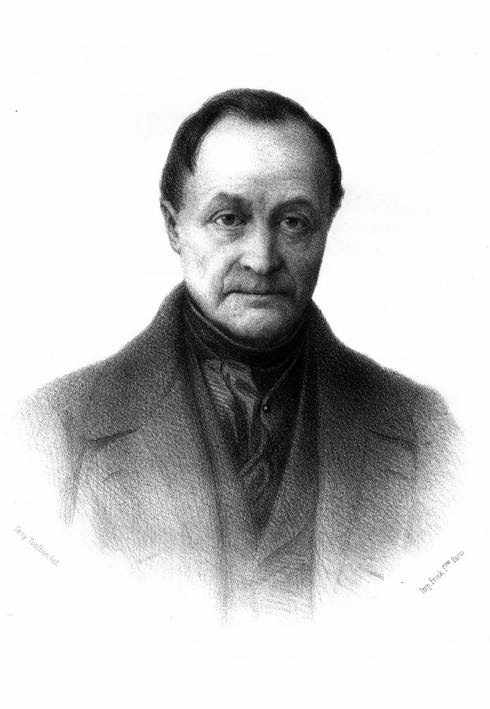
Frases de Auguste Comte

Auguste Comte, , es considerado el creador del positivismo y de la sociología.

Junto con Augustin Thierry, fue secretario del conde Henri de Saint-Simon durante siete años y ambos se separaron de él, debido a las muchas discrepancias que surgieron. Después de esta ruptura, Comte inició una etapa que calificó de "higiene cerebral" para alejarse de la influencia de las ideas de Saint-Simon.

Creó la palabra altruismo , en función de lo cual vivió: dio clases gratis de astronomía, escribió una enciclopedia de varios tomos él solo, todo para mejorar un mundo avaro en el que él sólo se empobreció. Su filosofía tuvo influencia tal que se fundaron países como Brasil en función de su filosofía, país en cuya bandera se lee Orden y Progreso, parte de la tríada filosófica de Comte . La influencia de su filosofía está tan entretejida en la vida de los países de los hombres ilustrados que ya no la distinguimos: la forma de ver a la ciencia como una fuente de progreso, la forma en la que organizamos las universidades, etc.

✵ 19. enero 1798 – 5. septiembre 1857
Auguste Comte Foto
Auguste Comte: 36 citas61 Me gusta

Frases célebres de Auguste Comte

“Saber es poder.”

Auguste Comte

Sin fuentes

Auguste Comte Frases y Citas

“Las mujeres viven en una infancia perpetua.”

Auguste Comte

Sin fuentes

“Los cielos proclaman la gloria de Kepler y Newton.”

Auguste Comte

Sin fuentes

“¡Qué pérdida irreparable!”

Auguste Comte

Últimas palabras.[Sin fuentes]

Auguste Comte: Frases en inglés

“Social positivism only accepts duties, for all and towards all. Its constant social viewpoint cannot include any notion of rights, for such notion always rests on individuality.”

Auguste Comte

Le Catéchisme positiviste (1852)
Contexto: Social positivism only accepts duties, for all and towards all. Its constant social viewpoint cannot include any notion of rights, for such notion always rests on individuality. We are born under a load of obligations of every kind, to our predecessors, to our successors, to our contemporaries. These obligations then increase or accumulate, for it is some time before we can return any service. … Any human right is therefore as absurd as immoral. Since there are no divine rights anymore, this concept must therefore disappear completely as related only to the preliminary regime and totally inconsistent with the final state where there are only duties based on functions.

“To understand a science it is necessary to know its history.”

Auguste Comte

A Course of Positive Philosophy (1832 - 1842) [Six volumes]

“The dead govern the living.”

Auguste Comte

Le Catéchisme positiviste (1852)

“Notwithstanding the eminent difficulties of the mathematical theory of sonorous vibrations, we owe to it such progress as has yet been made in acoustics. The formation of the differential equations proper to the phenomena is, independent of their integration, a very important acquisition, on account of the approximations which mathematical analysis allows between questions, otherwise heterogeneous, which lead to similar equations. This fundamental property, whose value we have so often to recognize, applies remarkably in the present case; and especially since the creation of mathematical thermology, whose principal equations are strongly analogous to those of vibratory motion. This means of investigation is all the more valuable on account of the difficulties in the way of direct inquiry into the phenomena of sound. We may decide the necessity of the atmospheric medium for the transmission of sonorous vibrations; and we may conceive of the possibility of determining by experiment the duration of the propagation, in the air, and then through other media; but the general laws of the vibrations of sonorous bodies escape immediate observation. We should know almost nothing of the whole case if the mathematical theory did not come in to connect the different phenomena of sound, enabling us to substitute for direct observation an equivalent examination of more favorable cases subjected to the same law. For instance, when the analysis of the problem of vibrating chords has shown us that, other things being equal, the number of oscillations is hi inverse proportion to the length of the chord, we see that the most rapid vibrations of a very short chord may be counted, since the law enables us to direct our attention to very slow vibrations. The same substitution is at our command in many cases in which it is less direct.”

Auguste Comte

Bk. 3, chap. 4; as cited in: Moritz (1914, 240)
System of positive polity (1852)

“After Montesquieu, the next great addition to Sociology (which is the term I may be allowed to invent to designate Social Physics) was made by Condorcet, proceeding on the views suggested by his illustrious friend Turgot.”

Auguste Comte

Book VI: Social Physics, Ch. II: Principle Philosophical Attempts to Constitute a Social System
The Positive Philosophy of Auguste Comte (1853)

“Mathematical Analysis is… the true rational basis of the whole system of our positive knowledge.”

Auguste Comte

Bk. 1, chap. 1; as cited in: Robert Edouard Moritz. Memorabilia mathematica; or, The philomath&#x27;s quotation-book https://archive.org/stream/memorabiliamathe00moriiala#page/81/mode/2up, (1914), p. 224 <br class="br">System of positive polity (1852)

“Foreknowledge is power.”

Auguste Comte

As quoted in A Dictionary of Scientific Quotations (1991) by Alan Lindsay Mackay

Autores similares

Émile Durkheim Foto
Émile Durkheim2
sociólogo francés None
Friedrich Nietzsche Foto
Friedrich Nietzsche752
filósofo alemán None
Karl Marx Foto
Karl Marx82
filósofo, sociólogo y economista alemán None
Eugéne Delacroix Foto
Eugéne Delacroix7
pintor francés None
Pierre Curie Foto
Pierre Curie1
físico francés None
Anatole France Foto
Anatole France61
escritor francés None
Alfred De Musset Foto
Alfred De Musset44
escritor y dramaturgo francés None
Pierre Joseph Proudhon Foto
Pierre Joseph Proudhon55
político francés None
Emile Zola Foto
Emile Zola23
escritor francés None
Stendhal Foto
Stendhal35
escritor francés None