Betty Friedan libro The Feminine Mystique
Fuente: The Feminine Mystique
Betty Friedan nacida como Betty Naomi Goldstein fue una teórica y líder feminista estadounidense de origen judío de las décadas de 1960 y 1970. Formada en psicología social en 1963 escribió La mística de la feminidad un libro clave en la historia del pensamiento feminista y considerado como uno de los libros de no ficción más influyentes del siglo XX. Publicado por WW Norton & Company, había vendido más de tres millones de copias en el año 2000.[1]
En el libro planteó la visión de las mujeres como seres psíquicos que configuran su identidad individual al hilo de sus relaciones sociales afrontando lo que denominó "el problema que no tiene nombre" manifestado en autodestructivas patologías como ansiedad, alcoholismo, desmedido deseo sexual, neurosis o incluso suicidio, propiciadas por la imposición de estereotipos que en la sociedad estadounidense de la posguerra relegaban a la mujer a su papel de esposas y madres ajenas a todo lo que ocurriera fuera del hogar. La obra de Friedan avanzó problemas y se adentró por primera vez en campos de investigación que posteriormente fueron claves de la filosofía feminista a pesar de no ser filósofa.
Friedan fue cofundadora y presidenta en 1966 de NOW, pionera en el movimiento de mujeres y que en el siglo XXI se mantiene como una de las organizaciones feministas más importantes de EE.UU..
En la década de 1970, planteó diversas luchas para la aprobación de las leyes sobre el aborto, el trabajo femenino y sobre los derechos de las mujeres en general. En 1981 publicó otro de sus libros clave para el feminismo: La segunda fase.
Betty Friedan está considerada una figura central del feminismo estadounidense.[2] Wikipedia
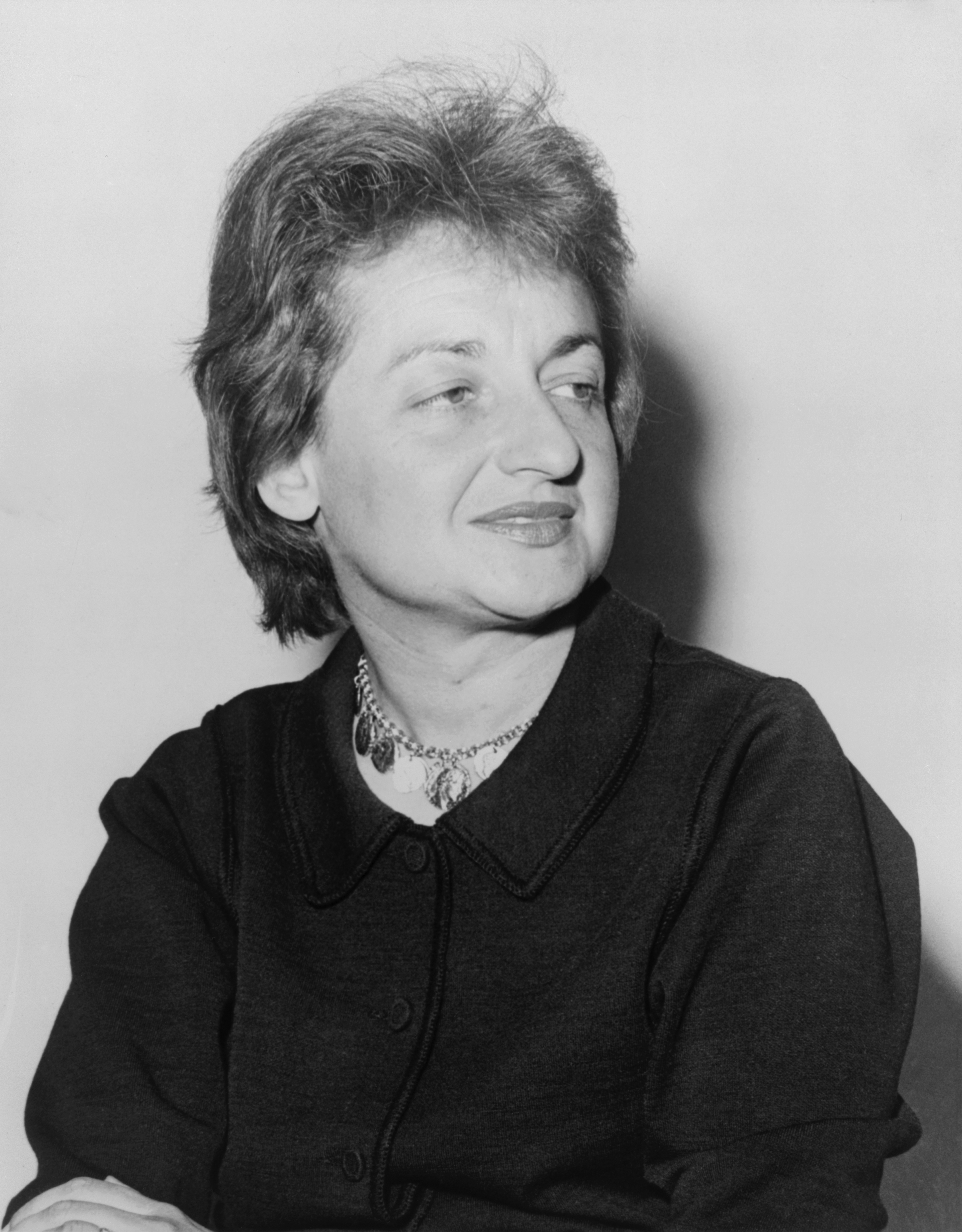
Betty Friedan libro The Feminine Mystique
Fuente: The Feminine Mystique
Betty Friedan libro The Feminine Mystique
Interviews with Betty Friedan, Janann Sherman, ed. Univ. Press of Mississippi, 2002, ISBN 1578064805, p. x.
Fuente: The Feminine Mystique
“It is easier to live through someone else than to become complete yourself.”
Betty Friedan libro The Feminine Mystique
Fuente: The Feminine Mystique (1963), Ch. 14 "A New Life Plan for Women".
As quoted by The Christian Science Monitor (1 April 1974) This has sometimes appeared paraphrased: "Man is not the enemy here, but the fellow victim."
“The problem lay buried, unspoken for many years in the minds of American women.”
Betty Friedan libro The Feminine Mystique
Opening lines, Ch. 1 "The Problem That Has No Name".
The Feminine Mystique (1963)
Contexto: The problem lay buried, unspoken for many years in the minds of American women. It was a strange stirring, a sense of dissatisfaction, a yearning that women suffered in the middle of the twentieth century in the United States. Each suburban housewife struggled with it alone. As she made the beds, shopped for groceries, matched slipcover material, ate peanut butter sandwiches with her children, chauffeured Cub Scouts and Brownies, lay beside her husband at night, she was afraid to ask even of herself the silent question — “Is this all?”
Betty Friedan libro The Fountain of Age
Preface.
The Fountain of Age (1993)
Contexto: What had really caused the women’s movement was the additional years of human life. At the turn of the century women’s life expectancy was forty-six; now it was nearly eighty. Our groping sense that we couldn’t live all those years in terms of motherhood alone was “the problem that had no name.” Realizing that it was not some freakish personal fault but our common problem as women had enabled us to take the first steps to change our lives.
Betty Friedan libro The Feminine Mystique
Fuente: The Feminine Mystique
Betty Friedan libro The Feminine Mystique
Fuente: The Feminine Mystique
Betty Friedan libro The Feminine Mystique
Fuente: The Feminine Mystique (1963), Ch. 11 "The Sex-Seekers".
The Playboy Interview (1992)
The Playboy Interview (1992)
It Changed My Life: Writings on the Women's Movement (1998)
Betty Friedan libro The Feminine Mystique
Fuente: The Feminine Mystique (1963), Ch. 14 "A New Life Plan for women".
Betty Friedan libro The Feminine Mystique
Fuente: The Feminine Mystique (1963), Ch. 1 "The Problem That Has No Name".
Betty Friedan libro The Feminine Mystique
Fuente: The Feminine Mystique (1963), Ch. 14 "A New Life Plan for Women".
“Do you object to the celebration of sexuality in our pictorials?”
The Playboy Interview (1992)
Betty Friedan libro The Fountain of Age
Fuente: The Fountain of Age (1993), Ch. 4.
“The feminine mystique has succeeded in burying millions of American women alive.”
Betty Friedan libro The Feminine Mystique
Ch 13 "The Forfeited Self".
The Feminine Mystique (1963)
Betty Friedan libro The Feminine Mystique
Fuente: The Feminine Mystique (1963), Ch. 14 "A New Life Plan for Women".
Betty Friedan libro The Feminine Mystique
Fuente: The Feminine Mystique (1963), Ch. 1 "The Problem That Has No Name"
“Playboy: What's behind the current's men's movement?”
The Playboy Interview (1992)
“Friedan: There was a masculine mystique, too.”
The Playboy Interview (1992)


