“If a tax on malt would raise the price of beer, a tax on bread must raise the price of bread.”
Fuente: The Principles of Political Economy and Taxation (1821) (Third Edition), Chapter XVII, Taxes on Other Commodities, p. 168
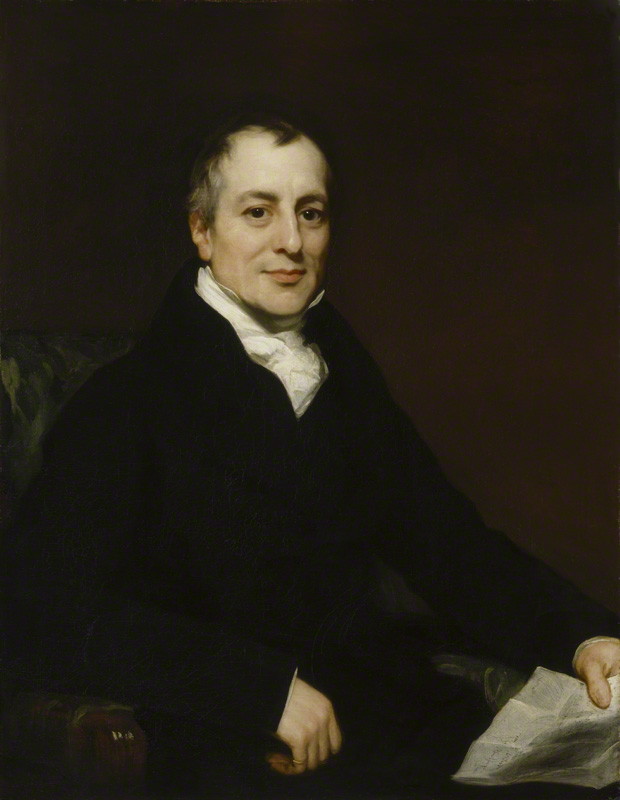
David Ricardo fue un economista inglés de origen judío sefardí-portugués, miembro de la corriente de pensamiento clásico económico y uno de los más influyentes junto a Adam Smith y Thomas Malthus. Continuó y profundizó el análisis del circuito de producción de la república, cuyo origen se remonta a Quesnay y al fisiocratismo. Es considerado uno de los pioneros de la macroeconomía moderna por su análisis de la relación entre beneficios y salarios, uno de los iniciadores del razonamiento que daría lugar a la ley de los rendimientos decrecientes y uno de los principales fundadores de la teoría cuantitativa del dinero. Es por ello que es invocado por familias de pensamiento económico muy diferentes, desde los neoclásicos a los marxistas ingleses.
También fue un hombre de negocios, especulador exitoso, agente de cambio y diputado, logrando amasar una considerable fortuna.[1] Wikipedia
“If a tax on malt would raise the price of beer, a tax on bread must raise the price of bread.”
Fuente: The Principles of Political Economy and Taxation (1821) (Third Edition), Chapter XVII, Taxes on Other Commodities, p. 168
Fuente: The Principles of Political Economy and Taxation (1821) (Third Edition), Chapter I, Section I, On Value, p. 11
Contexto: If I have to hire a labourer for a week, and instead of ten shillings I pay him eight, no variation having taken place in the value of money, the labourer can probably obtain more food and necessaries with his eight shillings than he before obtained for ten: but this is owing, not to a rise in the real value of his wages, as stated by Adam Smith, and more recently by Mr. Malthus, but to a fall in the value of the things on which his wages are expended, things perfectly distinct; and yet for calling this a fall in the real value of wages, I am told that I adopt new and unusual language, not reconcilable with the true principals of the science. To me it appears that the unusual and, indeed, inconsistent language is that used by my opponents.
Fuente: The Principles of Political Economy and Taxation (1821) (Third Edition), Chapter VII, On Foreign Trade, p. 81 (See also.. Karl Marx, Das Kapital,(Buch II), Chapter XX, p. 474)
Contexto: Under a system of perfectly free commerce, each country naturally devotes its capital and labour to such employments as are most beneficial to each. This pursuit of individual advantage is admirably connected with the universal good of the whole. By stimulating industry, by rewarding ingenuity, and by using most efficaciously the peculiar powers bestowed by nature, it distributes labour most effectively and most economically: while, by increasing the general mass of productions, it diffuses general benefit, and binds together, by one common tie of interest and intercourse, the universal society of nations throughout the civilized world.
“There can be no greater error then in supposing that capital is increased by non-consumption.”
Fuente: The Principles of Political Economy and Taxation (1821) (Third Edition), Chapter VIII, On Taxes, Foot note 1, p. 94
Fuente: The Principles of Political Economy and Taxation (1821) (Third Edition), Chapter II, On Rent, p. 43
Original Preface, p. 1
The Principles of Political Economy and Taxation (1821) (Third Edition)
“Sufficiently rich to satisfy all my desires and the reasonable desires of all those about me.”
Letter to James Mill, 1815, quoted in Newschool biography http://homepage.newschool.edu/het//profiles/ricardo.htm
Fuente: The Principles of Political Economy and Taxation (1821) (Third Edition), Chapter I, Section IV, On Value, p. 19
Fuente: The Principles of Political Economy and Taxation (1821) (Third Edition), Chapter XXIV, The Rent of Land, p. 220
Fuente: The Principles of Political Economy and Taxation (1821) (Third Edition), Chapter VII, On Foreign Trade, p. 93
Fuente: The Principles of Political Economy and Taxation (1821) (Third Edition), Chapter XXXII, Malthus on Rent, p. 273
Fuente: The Principles of Political Economy and Taxation (1821) (Third Edition), Chapter XXII, Bounties and Prohibitions, p. 201
Fuente: The Principles of Political Economy and Taxation (1821) (Third Edition), Chapter V, On Wages, p. 52
Fuente: The Principles of Political Economy and Taxation (1821) (Third Edition), Chapter XXX, Influence of Demand and Supply, p. 260
Advertisement To The Third Edition, p. 3
The Principles of Political Economy and Taxation (1821) (Third Edition)
“Money is neither a material to work upon nor a tool to work with.”
The High Price of Bullion (1810) http://socserv.mcmaster.ca/econ/ugcm/3ll3/ricardo/bullion
“The farmer and manufacturer can no more live without profit than the labourer without wages.”
Fuente: The Principles of Political Economy and Taxation (1821) (Third Edition), Chapter VI, On Profits, p. 73
Fuente: The Principles of Political Economy and Taxation (1821) (Third Edition), Chapter XXXII, Malthus on Rent, p. 288
Fuente: The Principles of Political Economy and Taxation (1821) (Third Edition), Chapter XVII, Taxes on Other Commodities, p. 161 (see also.. Consumption Tax)
“The demand for money is regulated entirely by its value, and its value by its quantity.”
Fuente: The Principles of Political Economy and Taxation (1821) (Third Edition), Chapter XIII, Taxes on Gold, p. 123
Fuente: The Principles of Political Economy and Taxation (1821) (Third Edition), Chapter I, Section V, On Value, p. 26
Fuente: The Principles of Political Economy and Taxation (1821) (Third Edition), Chapter XVI, Taxes on Wages, p. 141
Fuente: The Principles of Political Economy and Taxation (1821) (Third Edition), Chapter II, On Rent, p. 33
Fuente: The Principles of Political Economy and Taxation (1821) (Third Edition), Chapter III, On the Rent of Mines, p. 47
Fuente: The Principles of Political Economy and Taxation (1821) (Third Edition), Chapter XXXII, Malthus on Rent, p. 281
Fuente: The Principles of Political Economy and Taxation (1821) (Third Edition), Chapter I, Section I, On Value, p. 5
Original Preface, p. 1
The Principles of Political Economy and Taxation (1821) (Third Edition)
“The price of corn will naturally rise with the difficulty of producing the last portions of it,…”
Fuente: The Principles of Political Economy and Taxation (1821) (Third Edition), Chapter XXXII, Malthus on Rent, p. 276
“Utility then is not the measure of exchangeable value, although it is absolutely essential to it.”
Fuente: The Principles of Political Economy and Taxation (1821) (Third Edition), Chapter I, Section I, On Value, p. 5
“The variation in the value of money, however great, makes no difference in the rate of profits;…”
Fuente: The Principles of Political Economy and Taxation (1821) (Third Edition), Chapter I, On Value, p. 32


