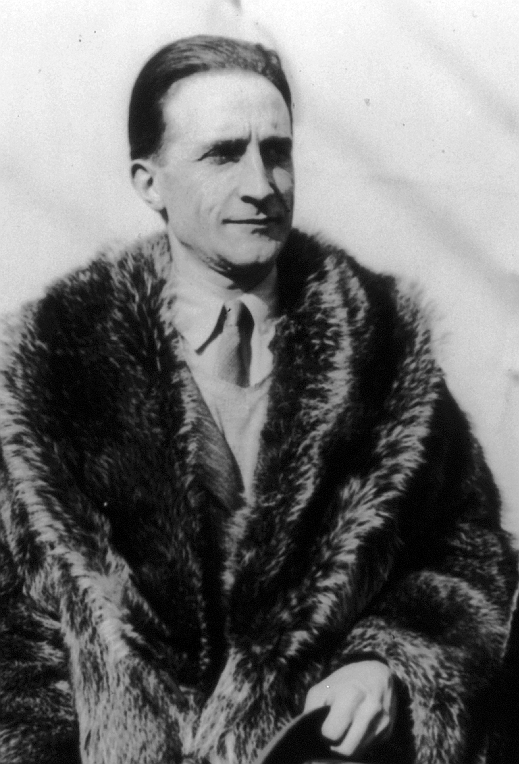
Frases célebres de Marcel Duchamp
Fuente: [Duchamp], Marcel; [Gervais], André (2010). Cartas sobre el arte 1916-1956, pp. 57-58, 65. Editorial Elba, Barcelona. ISBN 978-84-938034-6-9.
Fuente: Cartas sobre el arte 1916-1956, Capítulo «El acto creativo»
Marcel Duchamp Frases y Citas
Frase dicha en 1962, cuando sus obras fueron consideradas estéticas.
“No hay solución porque no existe ningún problema.”
Sin fuentes<br><br>Source: Eco, Volumen 44,Números 265-270 Portada Librería Buchholz., 1983 https://books.google.es/books?id=NY4wAAAAYAAJ&q=%C2%ABNo+hay+soluci%C3%B3n+porque+no+existe+ning%C3%BAn+problema%C2%BB+duchamp&dq=%C2%ABNo+hay+soluci%C3%B3n+porque+no+existe+ning%C3%BAn+problema%C2%BB+duchamp&hl=es&sa=X&ved=0ahUKEwia8_ezwKnoAhVAhXIEHfUmCZUQ6AEINDAB
Marcel Duchamp: Frases en inglés
Quote from The Writings of Marcel Duchamp (Marchand du Sel) e.d. Michel Sanouille and Elmer Peterson, New York 1973, pp. 139-140
posthumous
Contexto: The spectator experiences the phenomenon of transmutation; through the change from inert matter into a work of art, an actual transubstantiation has taken place... All in all, the creative act is not performed by the artist alone; the spectator brings the work into contact with the external world by deciphering and interpreting its inner qualifications and thus adds his contribution to the creative act.
“I have forced myself to contradict myself in order to avoid conforming to my own tastes.”
Quote by Harriet & Sidney Janis in 'Marchel Duchamp: Anti-Artist' in View magazine 3/21/45; reprinted in Robert Motherwell, Dada Painters and Poets (1951)
1921 - 1950
Variante: I force myself to contradict myself in order to avoid conforming to my own taste.
“Destruction is also creation.”
Fuente: Ref: en.wikiquote.org - J. Posadas / Quotes / War is Not the End of the World
“The most interesting thing about artists is how they live”
Fuente: The Writings of Marcel Duchamp
Quote from 'Time Magazine', 10 March 1952; as quoted on Wikipedia: Marcel Duchamp
1951 - 1968
1951 - 1968, The Creative Act', 1957
Contexto: I want to clarify our understanding of the word 'art' – to be sure, without an attempt to a definition. What I have in mind is that art may be bad, good or indifferent, but, whatever adjective is used, we must call it art, and bad art is still art in the same way as a bad emotion is still an emotion.
Therefore, when I refer to 'art coefficient', it will be understood that I refer not only to great art, but I am trying to describe the subjective mechanism which produces art in a raw state – 'à l'état brute' – bad, good or indifferent.
1951 - 1968, The Creative Act', 1957
Contexto: Let us consider two important factors, the two poles of the creation of art: the artist on one hand, and on the other the spectator who later becomes the posterity; to all appearances the artist acts like a mediumistic being who, from the labyrinth beyond time and space, seeks his way out to a clearing.
the same goes for my father and sisters.
Quote in Duchamp's letter to Walter Pach, Paris 27 April 1915; as quoted in The Duchamp Book, ed. Gavin Parkinson, Tate Publishing, London 2008 p. 157
1915 - 1925
long quote from Duchamp's letter to his sister Suzanne Duchamp, New York, c. 15 Jan. 1916; as quoted in The Duchamp Book, ed. Gavin Parkinson, Tate Publishing, London 2008 pp. 157-158
1915 - 1925
1951 - 1968, The Creative Act', 1957
Quote from The New York school – the painters & sculptors of the fifties, Irving Sandler, Harper & Row, Publishers, 1978, p. 164
posthumous
a daily life quote, in Duchamp's letter to the Stettheimers family in New York, from Buenos Aires 3 Mai 1919; as quoted in The Duchamp Book, ed. Gavin Parkinson, Tate Publishing, London 2008 p. 159
1915 - 1925
Quote from: Entretiens avec Marcel Duchamp, 1965; as cited in Futurism, ed. By Didier Ottinger; Centre Pompidou / 5 Continents Editions, Milan, 2008, p. 198
Duchamp's quote is referring to his painting 'Moulin a café', 1911 - many times reproduced from the lithography, made for the 1947 re-edition of Gleizes and Metzingers book 'Du Cubisme'
1951 - 1968
1951 - 1968, Apropos of Ready Mades', 1961
Quote from: Looking at Dada ed. Sarah Blyth / Edward Powers, MoMa, New york 2006; p. 13
posthumous
c. 25 years later
Quote from Duchamp's letter to fr:Jean Suquet (art historian), New York 25 December 1949; as cited in The Duchamp Book, ed. Gavin Parkinson, Tate Publishing, London 2008 p. 163
1921 - 1950
1951 - 1968, The Creative Act', 1957


