“Things are not always what they seem.”
Non semper ea sunt quae videntur.
Phaedrus libro Fables
Book IV, fable 2, line 5.
Fables
Cayo o Gayo Julio Fedro [a] fue un fabulista romano.
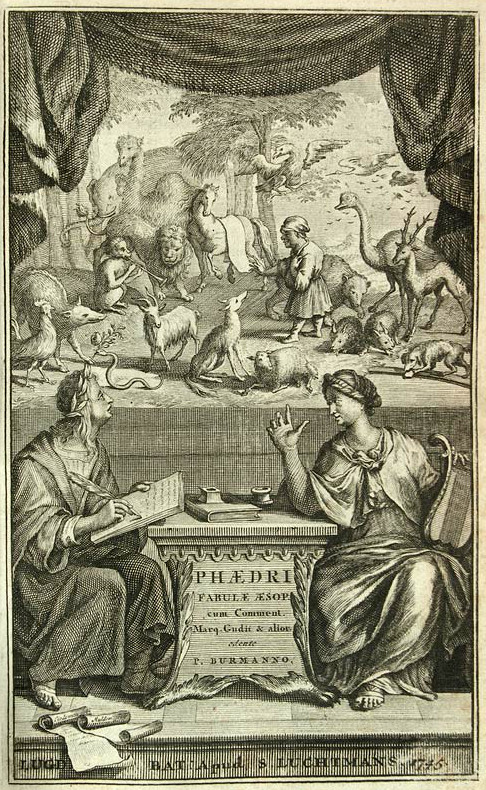
“Things are not always what they seem.”
Non semper ea sunt quae videntur.
Phaedrus libro Fables
Book IV, fable 2, line 5.
Fables
“Submit to the present evil, lest a greater one befall you.”
Phaedrus libro Fables
Book I, fable 2, line 31.
Fables
Phaedrus libro Fables
Book I, fable 25, line 3.
Fables
Phaedrus libro Fables
Book I, fable 10, line 1.
Fables
Phaedrus libro Fables
Book I, fable 13, line 13.
Fables
“No one returns with good-will to the place which has done him a mischief.”
Phaedrus libro Fables
Book I, fable 18, line 1.
Fables
“He who covets what belongs to another deservedly loses his own.”
Phaedrus libro Fables
Book I, fable 4, line 1.
Fables
Phaedrus libro Fables
Book IV, fable 23, line 1.
Fables
Phaedrus libro Fables
Book V, fable 9, line 4.
Fables
“A learned man always has riches within himself.”
Homo doctus in se semper divitias habet.
Phaedrus libro Fables
Book VI, fable 22, line 1
Fables
Phaedrus libro Fables
Book V, fable 3, line 1.
Fables
Phaedrus libro Fables
Book I, fable 9, line 1.
Fables
“Once lost, Jupiter himself cannot bring back opportunity.”
Phaedrus libro Fables
Book V, fable 7, line 4.
Fables
“Every one is bound to bear patiently the results of his own example.”
Phaedrus libro Fables
Book I, fable 26, line 12.
Fables


