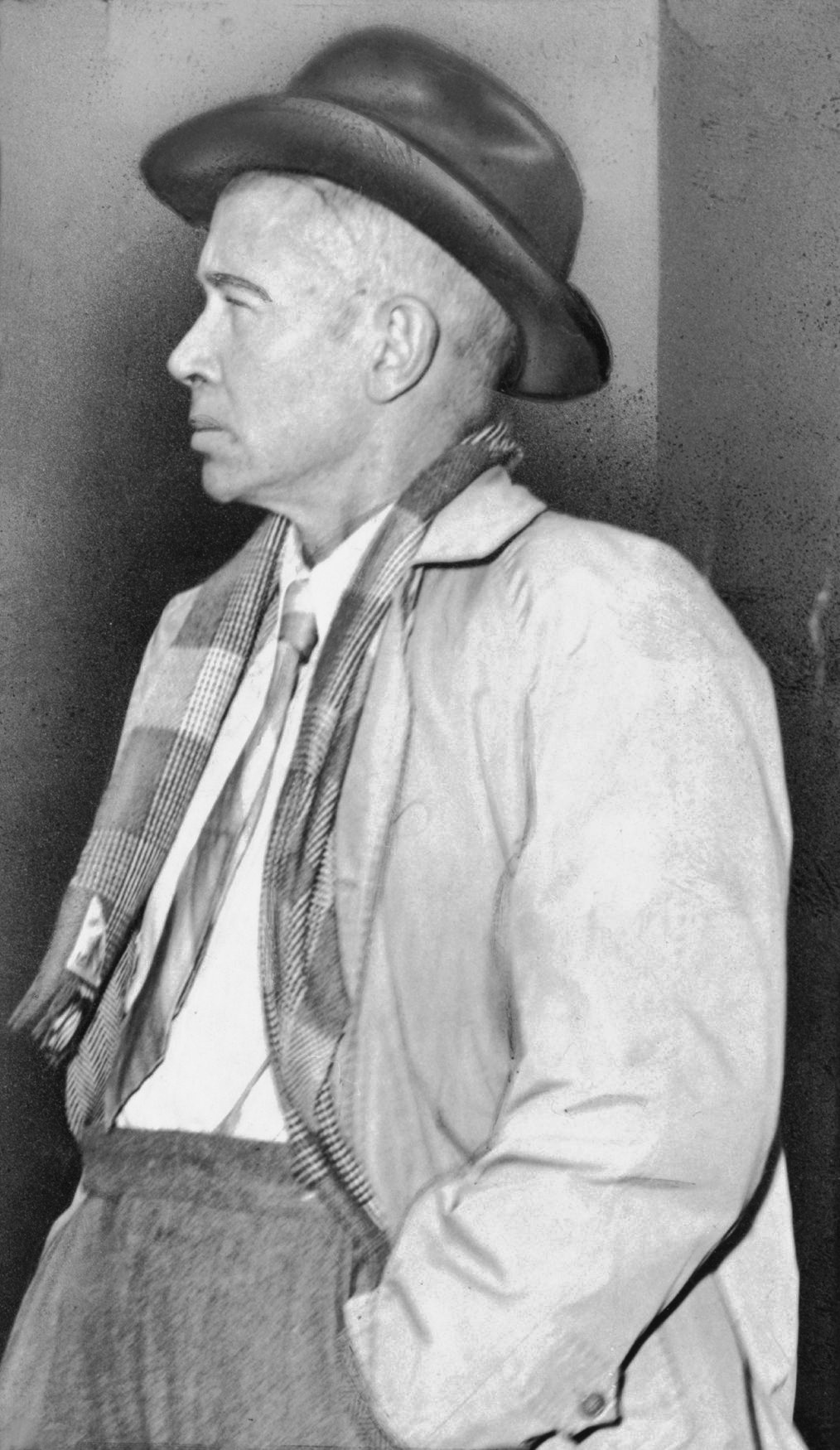
Frases célebres de Edward Estlin Cummings
Edward Estlin Cummings: Frases en inglés
“the voice of your eyes is deeper than all roses”
Fuente: Selected Poems
A Poet's Advice (1958)
Contexto: Almost anybody can learn to think or believe or know, but not a single human being can be taught to feel …
the moment you feel, you're nobody-but-yourself.
To be nobody-but-yourself — in a world which is doing its best, night and day, to make you everybody else — means to fight the hardest battle which any human being can fight; and never stop fighting.
“Trust your heart if the seas catch fire, live by love though the stars walk backward.”
Variante: Trust your heart if the seas catch fire, live by love though the stars walk backwards.
“it's you are whatever a moon has always meant
and whatever a sun will always sing is you”
92
95 poems (1958)
Variante: it's you are whatever a moon has always meant
and whatever a sun will always sing is you
A Foreword to Krazy (1946)
Contexto: A humbly poetic, gently clownlike, supremely innocent, and illimitably affectionate creature (slightly resembling a child's drawing of a cat, but gifted with the secret grace and obvious clumsiness of a penguin on terra firma) who is never so happy as when egoist-mouse, thwarting altruist-dog, hits her in the head with a brick. Dog hates mouse and worships "cat", mouse despises "cat" and hates dog, "cat" hates no one and loves mouse.
Variante: For whatever we lose (like a you or a me),
It's always our self we find in the sea.
Fuente: 100 Selected Poems
“I would rather learn from one bird how to sing than to teach 10,000 stars how not to dance.”
Collected Poems (1938) New Poems 22
Variante: I'd rather learn from one bird how to sing
than teach ten thousand stars how not to dance.
Variante: I will take the sun in my mouth and leap into the ripe air.
Fuente: Poems, 1923-1954
65 - This poem was used by Eric Whitacre for an a capella SATB chorus titled "i thank you God".
XAIPE (1950)
“it's spring when the world is puddle-wonderful”
E.E. Cummings libro Tulips and Chimneys
Tulips and Chimneys (1923) "in Just-"
“Tall as the truth was who; and
wore his
… life
like a …
sky.”
14
73 poems (1963)
Contexto: p>a great
man
is
gone.Tall as the truth was who; and
wore his
… life
like a …
sky.</p
“In other words, you don’t want to be serious—
It takes two to be serious.”
"Forward to an Exhibit: II" (1945)
Contexto: Your poems are rather hard to understand, whereas your paintings are so easy.
Easy?
Of course—you paint flowers and girls and sunsets; things that everybody understands.
I never met him.
Who?
Everybody.
Did you ever hear of nonrepresentational painting?
I am.
Pardon me?
I am a painter, and painting is nonrepresentational.
Not all painting.
No: housepainting is representational.
And what does a housepainter represent?
Ten dollars an hour.
In other words, you don’t want to be serious—
It takes two to be serious.
“Writing…is an art; and artists…are human beings. As a human being stands, so a human being is….”
E.E. Cummings The Enormous Room
The Enormous Room (1922)
A Poet's Advice (1958)
Contexto: Almost anybody can learn to think or believe or know, but not a single human being can be taught to feel …
the moment you feel, you're nobody-but-yourself.
To be nobody-but-yourself — in a world which is doing its best, night and day, to make you everybody else — means to fight the hardest battle which any human being can fight; and never stop fighting.
A Foreword to Krazy (1946)
Contexto: This hero and villain no more understand Krazy Kat than the mythical denizens of a two dimensional realm understand some three dimensional intruder. The world of Offissa Pupp and Ignatz Mouse is a knowledgeable power-world, in terms of which our unknowledgeable heroine is powerlessness personified. The sensical law of this world is might makes right; the nonsensical law of our heroine is love conquers all. To put the oak in the acorn: Ignatz Mouse and Offissa Pupp (each completely convinced that his own particular brand of might makes right) are simple-minded—Krazy isn't—therefore, to Offissa Pupp and Ignatz Mouse, Krazy is. But if both our hero and our villain don't and can't understand our heroine, each of them can and each of them does misunderstand her differently. To our softhearted altruist, she is the adorably helpless incarnation of saintliness. To our hardhearted egoist, she is the puzzlingly indestructible embodiment of idiocy. The benevolent overdog sees her as an inspired weakling. The malevolent undermouse views her as a born target. Meanwhile Krazy Kat, through this double misunderstanding, fulfills her joyous destiny.


