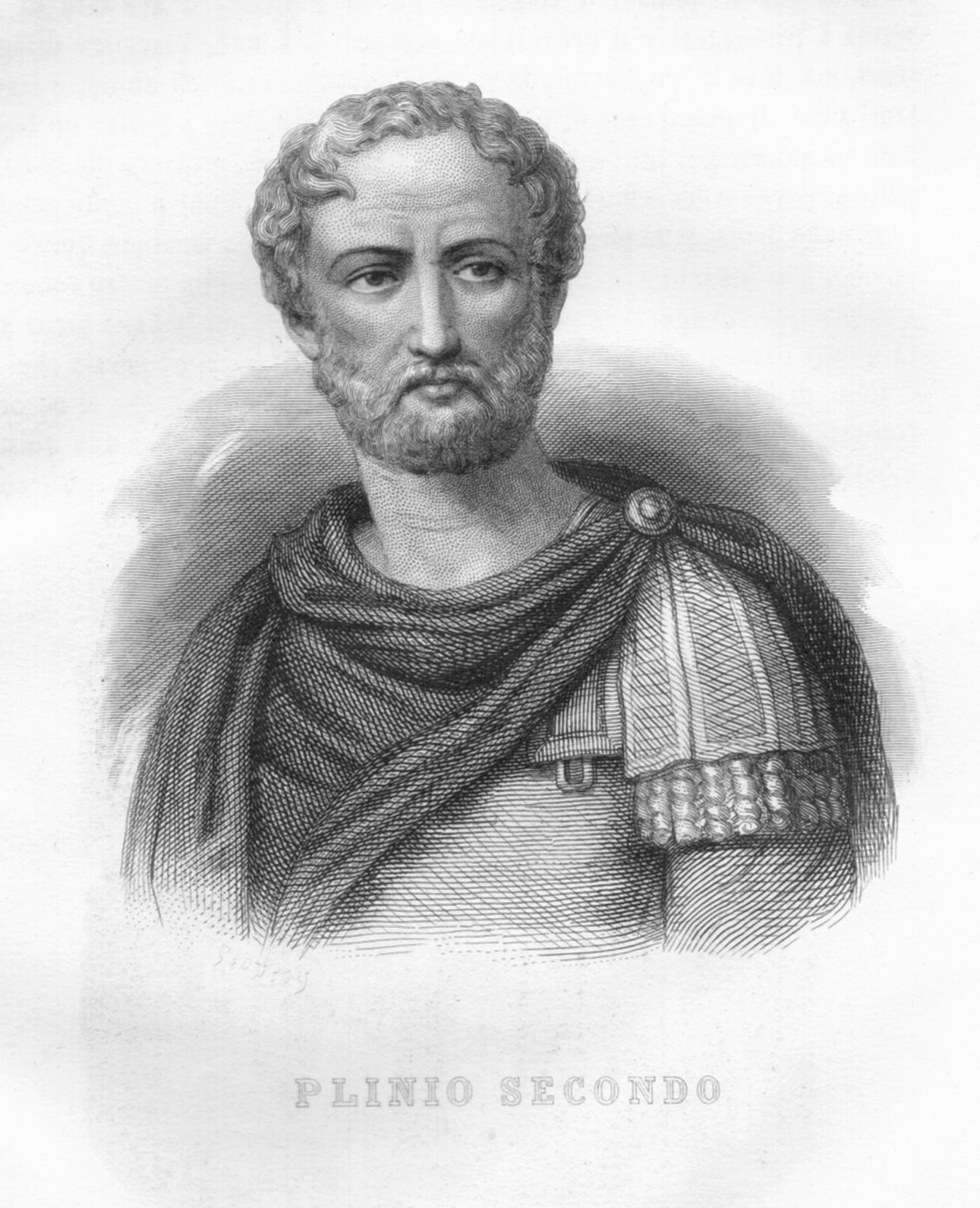
Obras
Naturalis historia
Plinio el ViejoNaturalis historia
Plinio el ViejoFrases célebres de Plinio el Viejo
Plinio el Viejo Frases y Citas
Plinio el Viejo: Frases en inglés
Pliny the Elder libro Naturalis historia
Book VII, sec. 4.
Naturalis Historia
“Why is it that we entertain the belief that for every purpose odd numbers are the most effectual?”
Pliny the Elder libro Naturalis historia
Book XXVIII, sec. 23.
Naturalis Historia
“Always act in such a way as to secure the love of your neighbour.”
Pliny the Elder libro Naturalis historia
Book XVIII, sec. 44.
Naturalis Historia
“When a building is about to fall down, all the mice desert it.”
ruinis inminentibus musculi praemigrant...
Pliny the Elder libro Naturalis historia
Book VIII, sec. 103.
Naturalis Historia
Pliny the Elder libro Naturalis historia
Book VII, sec. 1.
Naturalis Historia
“The best plan is, as the common proverb has it, to profit by the folly of others.”
Pliny the Elder libro Naturalis historia
Book XVIII, sec. 31.
Naturalis Historia
“With man, most of his misfortunes are occasioned by man.”
Pliny the Elder libro Naturalis historia
Book VII, sec. 5.
Naturalis Historia
“It has become quite a common proverb that in wine there is truth.”
Pliny the Elder libro Naturalis historia
Book XIV, sec. 141.
Naturalis Historia
Pliny the Elder libro Naturalis historia
Book VIII, sec. 126.
Naturalis Historia
Pliny the Elder libro Naturalis historia
Book VII, sec. 2.
Naturalis Historia
Pliny the Elder libro Naturalis historia
Book VII, sec. 2.
Naturalis Historia
Pliny the Elder libro Naturalis historia
Book VII, sec. 8.
Naturalis Historia
Pliny the Elder libro Naturalis historia
Book XXXV, sec. 84.
Naturalis Historia
Pliny the Elder libro Naturalis historia
Book II, sec. 20.
Naturalis Historia
Pliny the Elder libro Naturalis historia
Book VII, sec. 6.
Naturalis Historia
“With a grain of salt.”
Cum grano salis.
Pliny the Elder libro Naturalis historia
Book XXIII, sec. 8.
Naturalis Historia
Pliny the Elder libro Naturalis historia
Book XVIII, sec. 20.
Naturalis Historia
Pliny the Elder libro Naturalis historia
Book II, sec. 234.
Naturalis Historia
“Fortune favours the brave.”
Fortes Fortuna iuvat.
Attributed by Pliny the Younger to his uncle during the eruption of Mount Vesuvius in which the Elder died <br class="br">Quoted in [Pliny, translated by William Melmoth, Letters of Pliny, c.100 CE, eBook, 1927, Bibliobytes, Hoboken, NJ, English, ISBN 0585049971, LXV, to Tacitus http://www.gutenberg.org/files/2811/2811-h/2811-h.htm#link2H_4_0065, p. 48, Here he stopped to consider whether he should turn back again; to which the pilot advising him, "Fortune", said he, "favours the brave; steer to where Pomponianus is."] <br class="br">Commonly quoted as "Fortune favours the bold".
“It is generally admitted that the absent are warned by a ringing in the ears, when they are being talked about.”
Absentes tinnitu aurium præsentire sermones de se receptum est.
Pliny the Elder libro Naturalis historia
Book XXVIII, sec. 5.
Naturalis Historia
“This is Italy, land sacred to the Gods.”
Haec est Italia diis sacra
Pliny the Elder libro Naturalis historia
Book III, sec. 46.
Naturalis Historia
“The only certainty is that nothing is certain.”
Pliny the Elder libro Naturalis historia
Fuller version: This series of instances entangles unforeseeing mortality, so that among these things but one thing is in the least certainthat nothing certain exists, and that nothing is more pitiable, or more presnmptuous, than man! In Latin: Quae singula inprovidam mortalitatem involvunt, solum ut inter ista vel certu sit nihil esse certi nec quicquam miserius homine aut superbius.
Book II, sec. 5.
Naturalis Historia
Pliny the Elder libro Naturalis historia
Book II, sec. 1.
Naturalis Historia
Pliny the Elder libro Naturalis historia
Book I, Dedication, sec. 22.
Naturalis Historia
Pliny the Elder libro Naturalis historia
Book VII, sec. 77.
Naturalis Historia
Pliny the Elder libro Naturalis historia
Book VIII, sec. 148.
Naturalis Historia
Pliny the Elder libro Naturalis historia
Book XVIII, sec. 26.
Naturalis Historia
Pliny the Elder libro Naturalis historia
Book VII, sec. 15.
Naturalis Historia
“The bird of passage known to us as the cuckoo.”
Pliny the Elder libro Naturalis historia
Book XVIII, sec. 249.
Naturalis Historia
“Let not things, because they are common, enjoy for that the less share of our consideration.”
Pliny the Elder libro Naturalis historia
Book XIX, sec. 59.
Naturalis Historia


