“Most people are fools, most authority is malignant, God does not exist, and everything is wrong.”
quoted by Gary Wolf in "The Curse of Xanadu" http://www.wired.com/wired/archive/3.06/xanadu_pr.html in Wired (6/1995)
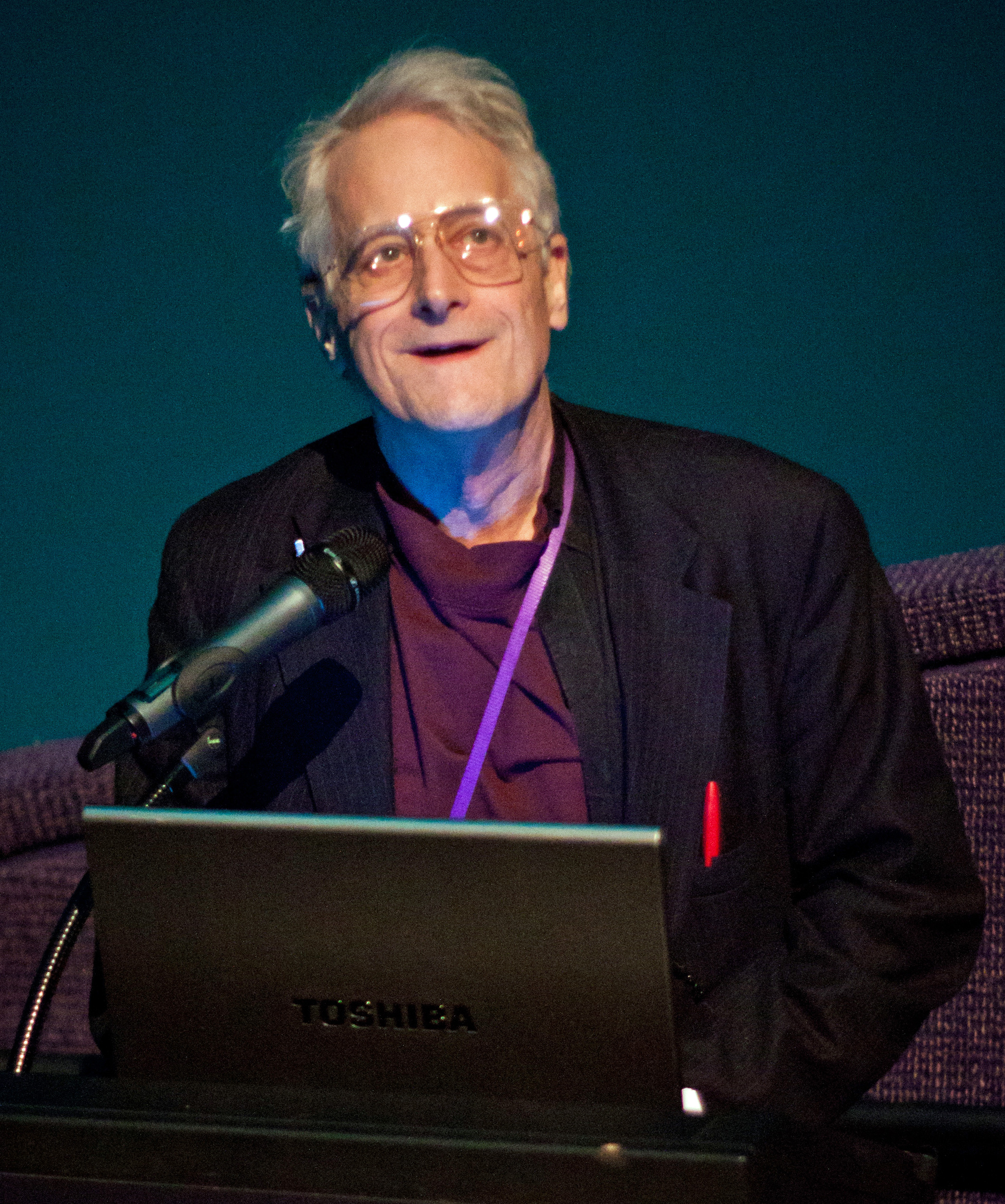
Theodor Holm Nelson [1]es un filósofo, sociólogo y pionero de la tecnología de la información estadounidense. Actualmente es profesor de Environmental Information en la Universidad de Keiō, Japón, y profesor de multimedia en la Universidad de Southampton, Inglaterra. Pero por lo que es más conocido es por acuñar los términos hipertexto e hipermedia y por ser el fundador del proyecto Xanadú en la década del 60. La idea de Xanadu -surgida después de una visita al Xerox PARC- era crear una biblioteca en línea con toda la literatura de la humanidad.
Su padre era Ralph Nelson, director premiado con un Emmy de la Academia, y su madre, Celeste Holm, actriz estadounidense de televisión, también premiada con dicho galardón.
La motivación fundamental de su trabajo ha sido hacer que los ordenadores sean fácilmente accesibles a la gente normal. Su lema es: “la interfaz debe ser tan simple que un principiante en una emergencia pueda entenderlo en un plazo de 10 segundos”. Wikipedia
“Most people are fools, most authority is malignant, God does not exist, and everything is wrong.”
quoted by Gary Wolf in "The Curse of Xanadu" http://www.wired.com/wired/archive/3.06/xanadu_pr.html in Wired (6/1995)
“After all, dumbing down Xanadu sure worked well for Tim Berners-Lee!”
Article on Nelson's website, "Indirect Documents at Last!" http://www.hyperland.com/trollout.txt (2005)
“If computers are the wave of the future, displays are the surfboards.”
Dream Machines, p 22.
Computer Lib/Dream Machines (1974, rev. 1987)
Dream Machines
Computer Lib/Dream Machines (1974, rev. 1987)
“Everything is deeply intertwingled.”
Computer Lib p. 42 / Dream Machines p.45
Computer Lib/Dream Machines (1974, rev. 1987)
Ted Nelson motto http://sydney.edu.au/news/84.html?newsstoryid=6681
BBC News Interview, "Visionary lays into the web" http://news.bbc.co.uk/1/hi/sci/tech/1581891.stm (2001)
Dream Machines
Computer Lib/Dream Machines (1974, rev. 1987)
Dream Machines
Computer Lib/Dream Machines (1974, rev. 1987)
“You can and must understand computers now!”
Slogan. (The insistence that ordinary people need to understand computers is remarkable for its era: the first personal computers were not available until 1975.)
Computer Lib/Dream Machines (1974, rev. 1987)
Quoted in In Venting, a Computer Visionary Educates http://www.nytimes.com/2009/01/11/business/11stream.html?_r=1 by John Markoff, published January 10, 2009 in the New York Times, page BU4 of the New York edition.
Computer Lib
Computer Lib/Dream Machines (1974, rev. 1987)
“We should not impose regularity where it does not exist.”
Ted Nelson on Zigzag data structures http://www.youtube.com/watch?feature=player_detailpage&v=WEj9vqVvHPc#t=188s (6 September, 2008
Computer Lib
Computer Lib/Dream Machines (1974, rev. 1987)
Ted Nelson's Home Page http://xanadu.com.au/ted/XU/XuPageKeio.html (November 17, 1998)
http://www.raphkoster.com/2011/10/13/gdco2011-its-all-games-now/


