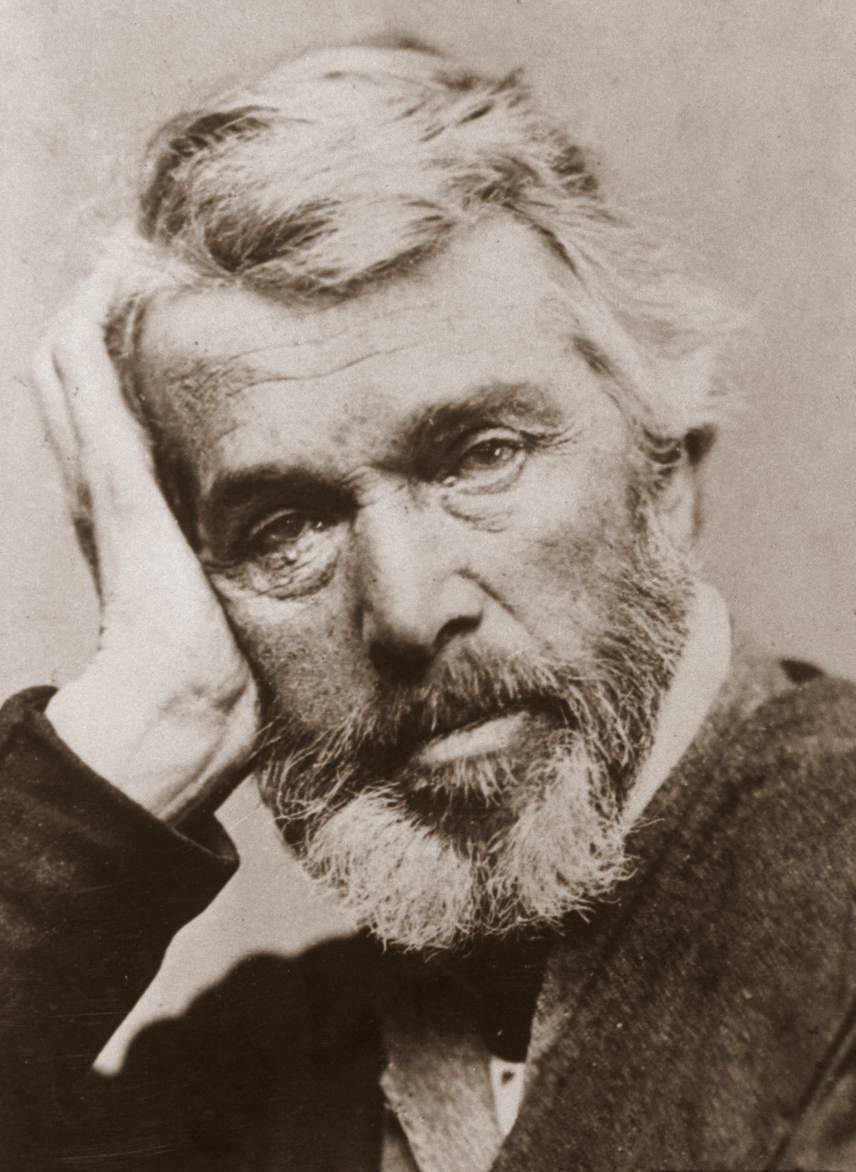
Frases célebres de Thomas Carlyle
“La educación y la cortesía abren todas las puertas.”
Fuente: [Villamarin Pulido], Luis Alberto. Superación personal: Tesoro de la sabiduría- Tomo II. Editorial Luis Villamarin, 2015. ISBN 9781512274851, p. 87.
“Aquel que no puede guardar sus pensamientos dentro de sí nunca llevará a cabo grandes cosas.”
Fuente: [Cantú Garza], Miqueas. «En la opinión.» 24 de mayo de 2015. http://www.laprensa.mx/notas.asp?id=362577 La Prensa. Consultado el 22 de febrero de 2019.
“El hombre hace menos de lo que debería, a menos que haga todo lo que puede.”
Original: «Men do less than they ought, unless they do all they can». <br class="br">Fuente: [Balachandran], Mira. Quotation for all Occasions. Emerald Publishers. ISBN 9788179662427, p. 72. https://books.google.es/books?id=-1siBQAAQBAJ&pg=PA72&dq=Men+do+less+than+they+ought,+unless+they+do+all+they+can.+Thomas+Carlyle&hl=es&sa=X&ved=0ahUKEwijhf_m38_gAhWIAGMBHeiDB0QQ6AEIKzAA#v=onepage&q=Men%20do%20less%20than%20they%20ought%2C%20unless%20they%20do%20all%20they%20can.%20Thomas%20Carlyle&f=false
Frases de hombres de Thomas Carlyle
Fuente: [Martín], Santiago. La oscuridad luminosa. Editorial EDAF, 2016. ISBN 9788441436862. https://books.google.es/books?id=YGezDAAAQBAJ&pg=PT109&dq=De+nada+le+sirve+al+hombre+lamentarse+de+los+tiempos+en+que+vive,+pero+siempre+le+es+posible+mejorarlos.+Thomas+Carlyle&hl=es&sa=X&ved=0ahUKEwixj9L7zc_gAhWsyoUKHUC4CuIQ6AEIKDAA#v=onepage&q=De%20nada%20le%20sirve%20al%20hombre%20lamentarse%20de%20los%20tiempos%20en%20que%20vive%2C%20pero%20siempre%20le%20es%20posible%20mejorarlos.%20Thomas%20Carlyle&f=false
Fuente: [Quevedo], Numa. La meta posible: visión continental. Prólogo de Agustín Rodríguez Garabito. Editorial Kelly, Bogotá, 1970, p. 284.
“La verdad es que el arte de escribir es la cosa más milagrosa de cuantas el hombre ha imaginado.”
Fuente: Noguera Trujillo, Héctor. 100 lecciones para aprendices de escritor. Panorama Editorial, 2005. ISBN 9789683813923, p. 90. https://books.google.es/books?id=_kloewDzZRAC&pg=PA90&dq=La+verdad+es+que+el+arte+de+escribir+es+la+cosa+m%C3%A1s+milagrosa+de+cuantas+el+hombre+ha+imaginado.+Thomas+Carlyle&hl=es&sa=X&ved=0ahUKEwi0keno8M_gAhUG2xoKHWQtA4MQ6AEIKDAA#v=onepage&q=La%20verdad%20es%20que%20el%20arte%20de%20escribir%20es%20la%20cosa%20m%C3%A1s%20milagrosa%20de%20cuantas%20el%20hombre%20ha%20imaginado.%20Thomas%20Carlyle&f=false
Fuente: [Benavent], Joan. Perón, luz y sombras: 1946-1955, la dictadura populista. Colección Memoria. Edición ilustrada. Editorial Letras e Imagos, 2006. p. 1.254.
Fuente: [Jacobo], Jesús Michel. Las venas abiertas de la Universidad. Editorial Universidad Autónoma de Sinaloa, 1998. ISBN 9789687636689, p. 64.
Frases de verdad de Thomas Carlyle
“La verdadera universidad de hoy en día es una colección de libros.”
Fuente: [Palomo Triguero], Eduardo. Cita-logía. Editorial Punto Rojo Libros, S.L. ISBN 978-84-16068-10-4, p. 185.
Thomas Carlyle Frases y Citas
Fuente: La palabra y los pensamientos. Editorial Encrucijada, 2005. ISBN 9789568542009. p. 228.
“A menudo los grandes son desconocidos o peor, mal conocidos.”
Fuente: [Meisel L.], Roberto. Quevedo, Gracián, Feijoo: máximas y reflexiones ; Una carta procedente del infierno ; Jovellanos, paradigma de la Ilustración española. Editorial Tercer Mundo, 1996. ISBN 9789589541685, p. 279.
“Con números se puede demostrar cualquier cosa.”
Fuente: Matemáticas 4. Serie integral por competencias DGB. Autores Francisco José Ortiz Campos, Francisco Javier Ortiz Cerecedo, Fernando José Ortiz Cerecedo. Grupo Editorial Patria, 2000. ISBN 9786077440024, p. 167. https://books.google.es/books?id=MqGEBgAAQBAJ&pg=PA166&dq=Con+n%C3%BAmeros+se+puede+demostrar+cualquier+cosa.+Thomas+Carlyle&hl=es&sa=X&ved=0ahUKEwiqwbqYzc_gAhVq1eAKHcWDD0gQ6AEILTAB#v=onepage&q=Con%20n%C3%BAmeros%20se%20puede%20demostrar%20cualquier%20cosa.%20Thomas%20Carlyle&f=false
“El asombro es la base de la adoración.”
Fuente: Sartor Resartus, and On Heroes, Hero-Worship, and the Heroic in. Thomas Carlyle. Editorial BoD – Books on Demand, 2018. ISBN 9783734027130, p. 64. https://books.google.es/books?id=OBpwDwAAQBAJ&pg=PA64&dq=Wonder+is+the+basis+of+worship.+Thomas+Carlyle&hl=es&sa=X&ved=0ahUKEwicm8zQ0s_gAhVQXBoKHUFtBgIQ6AEIOzAC#v=onepage&q=Wonder%20is%20the%20basis%20of%20worship.%20Thomas%20Carlyle&f=false
“El ideal está en ti; el obstáculo para su cumplimiento también.”
Fuente: [Palomo Triguero], Eduardo. Cita-logía. Editorial Punto Rojo Libros, S.L. ISBN 978-84-16068-10-4, p. 160.
“Hablar es el arte de sofocar e interrumpir el pensamiento.”
Fuente: El Lenguaje oral: fundamentos, formas y técnicas. Editorial Plus Ultra, 1984, p. 67.
“La historia es la esencia de innumerables biografías.”
Fuente: [Suárez], Ada. El género biográfico en la obra de Eugenio d'Ors. Volumen 20 de Ambitos literarios: Ensayo. Edición ilustrada. Anthropos Editorial, 1988. ISBN 9788476580844, p. 215. https://books.google.es/books?id=t_tOszni-Q8C&pg=PA215&dq=La+historia+es+la+esencia+de+innumerables+biograf%C3%ADas.+Thomas+Carlyle&hl=es&sa=X&ved=0ahUKEwjhrvve5s_gAhVkxYUKHXeRA9UQ6AEIKDAA#v=onepage&q=La%20historia%20es%20la%20esencia%20de%20innumerables%20biograf%C3%ADas.%20Thomas%20Carlyle&f=false
“La historia es la destilación del rumor.”
Sin fuentes <br class="br">Original: «History is the distillation of rumor». <br class="br">Fuente: Uncle John's Facts to Go History Makers. Volumen 1 de Facts to Go. Autor Bathroom Readers' Institute. Editorial Simon and Schuster, 2013. ISBN 9781626861572. https://books.google.es/books?id=SipZDwAAQBAJ&pg=PT37&dq=History+is+a+distillation+of+rumor.+Thomas+Carlyle&hl=es&sa=X&ved=0ahUKEwjSjqHd58_gAhUmxYUKHZU5DJsQ6AEIKDAA#v=onepage&q=History%20is%20a%20distillation%20of%20rumor.%20Thomas%20Carlyle&f=false
Fuente: [Amate Pou], Jordi. Paseando por una parte de la Historia: Antología de citas. Editorial Penguin Random House Grupo Editorial España, 2017. ISBN 9788417321871, p. 74.
Fuente: [Huertas], Abner Alexander. El crecimiento de un líder. Editorial Vida, 2013. ISBN 9780829764000. https://books.google.es/books?id=6ynuV0OtuPcC&pg=PT106&dq=Si+se+siembra+la+semilla+con+fe+y+se+cuida+con+perseverancia,+solo+ser%C3%A1+cuesti%C3%B3n+de+recoger+sus+frutos.+Thomas+Carlyle&hl=es&sa=X&ved=0ahUKEwiH9LvI-M_gAhUd4OAKHfiZBT4Q6AEIKDAA#v=onepage&q=Si%20se%20siembra%20la%20semilla%20con%20fe%20y%20se%20cuida%20con%20perseverancia%2C%20solo%20ser%C3%A1%20cuesti%C3%B3n%20de%20recoger%20sus%20frutos.%20Thomas%20Carlyle&f=false
“Somos el milagro de los milagros, el gran inescrutable misterio de Dios.”
Fuente: Los héroes. Thomas Carlyle. Volumen 1009 de Austral: Serie anaranjada : biografías y vidas novelescas. Traducido por Francisco Gallach Palés. 2ª edición. Editorial Espasa-Calpe Argentina, 1951. Página 17.
Fuente: [Red], Samuel. Las mejores citas de provocación/Best provocation sayings: contra todo y contra todos. Coña fina. Editorial Grasindo, 2008. ISBN 9788479277802, p. 314.
“Un gran hombre demuestra su grandeza por la forma en que trata a los pequeños.”
Fuente: [Mora Caldas], Jorge. Temas que hacen pensar. 2016. ISBN 9789584681409, p. 223. https://books.google.es/books?id=bV8iDQAAQBAJ&pg=PA223&dq=Un+gran+hombre+demuestra+su+grandeza+por+la+forma+en+que+trata+a+los+peque%C3%B1os.+Thomas+Carlyle&hl=es&sa=X&ved=0ahUKEwi_2fjT-s_gAhUDxoUKHc8JAqcQ6AEIKDAA#v=onepage&q=Un%20gran%20hombre%20demuestra%20su%20grandeza%20por%20la%20forma%20en%20que%20trata%20a%20los%20peque%C3%B1os.%20Thomas%20Carlyle&f=false
Thomas Carlyle libro Sartor Resartus
Fuente: Sartor resartus: Vida y opiniones del Señor Teufelsdröckh, Volúmenes 1-2. Biblioteca sociológica internacional. Thomas Carlyle. Editorial Imp. de Henrich, 1905. Página 77.
Thomas Carlyle libro Past and Present
Fuente: [Alonso Piñeiro], Armando. Historia, volumen 1, números 2-4. Publicado en 1981, p. 120.
Fuente: Past and Present, 1843.
Fuente: Carlyle, Thomas. Past and Present. 2.ª Edición. Editorial Chapman and Hall, 1845.
Thomas Carlyle: Frases en inglés
1850s, Latter-Day Pamphlets (1850), Stump Orator (May 1, 1850)
Reminiscences (1881), referring to his father, James Carlyle.
Sometimes quoted as "Man was created to work, not to speculate, or feel, or dream; Every idle moment is treason". The second of those two clauses in fact comes from Thomas Arnold The Christian Life (1841), Lecture VI.
1880s
“No sadder proof can be given by a man of his own littleness than disbelief in great men.”
1840s, Heroes and Hero-Worship (1840), The Hero as Divinity
1840s, Heroes and Hero-Worship (1840), The Hero as Priest
1850s, Latter-Day Pamphlets (1850), The Present Time (February 1, 1850)
1840s, Heroes and Hero-Worship (1840), The Hero as Prophet
“"The people may eat grass": hasty words, which fly abroad irrevocable—and will send back tidings.”
Pt. I, Bk. III, ch. 9.
1830s, The French Revolution. A History (1837)
“One life; a little gleam of Time between two Eternities; no second chance to us for evermore!”
1840s, Heroes and Hero-Worship (1840), The Hero as Man of Letters
1840s, Heroes and Hero-Worship (1840), The Hero as Prophet
1840s, Heroes and Hero-Worship (1840), The Hero as Prophet
“The three great elements of modern civilization, gunpowder, printing, and the Protestant religion.”
The State of German Literature (1827).
1820s, Critical and Miscellaneous Essays (1827–1855)
1840s, Heroes and Hero-Worship (1840), The Hero as Divinity
1860s, On The Choice Of Books (1866)
1840s, Heroes and Hero-Worship (1840), The Hero as Man of Letters
“Can there be a more horrible object in existence than an eloquent man not speaking the truth?”
Address as Lord Rector of Edinburgh University, (1866), reported in Bartlett's Familiar Quotations, 10th ed. (1919).
Attributed
“A mystic bond of brotherhood makes all men one.”
Essays, Goethe's Works.
1820s, Critical and Miscellaneous Essays (1827–1855)
1880s, Reminiscences (1881)
Why, really one might ask the same thing, in regard to every man proposed for whatsoever function; and consider it as the one inquiry needful: Are ye sure he's.
1840s, Heroes and Hero-Worship (1840), The Hero as Poet
1840s, Past and Present (1843)
“A great man shows his greatness by the way he treats little men.”
Attributed to Carlyle in Dale Carnegie's How to Win Friends And Influence People (1936), but this quotation is not found in Carlyle's known works. The first mention found in Google Books dates from 1908, where the Rev. John Timothy Stone https://en.wikipedia.org/wiki/John_Timothy_Stone is quoted as claiming: 'The greatest critics of this world have been appreciators. Carlyle said, "You can discover a great man, or see a great man, by the way he treats little men.'<br>The quotation is subsequently found in slightly different forms, mostly in religious publications: "A great man shows his greatness by manner in which he treats little men" (1913, unattributed); The exact wording of Carnegie's quote suggests that it was taken from Stone's 1930 publication. <br class="br">Disputed
1880s, Reminiscences (1881)
“With what scientific stoicism he walks through the land of wonders, unwondering.”
1820s, Signs of the Times (1829)
1850s, Latter-Day Pamphlets (1850), Stump Orator (May 1, 1850)
1820s, Signs of the Times (1829)
1840s, Heroes and Hero-Worship (1840), The Hero as Poet


