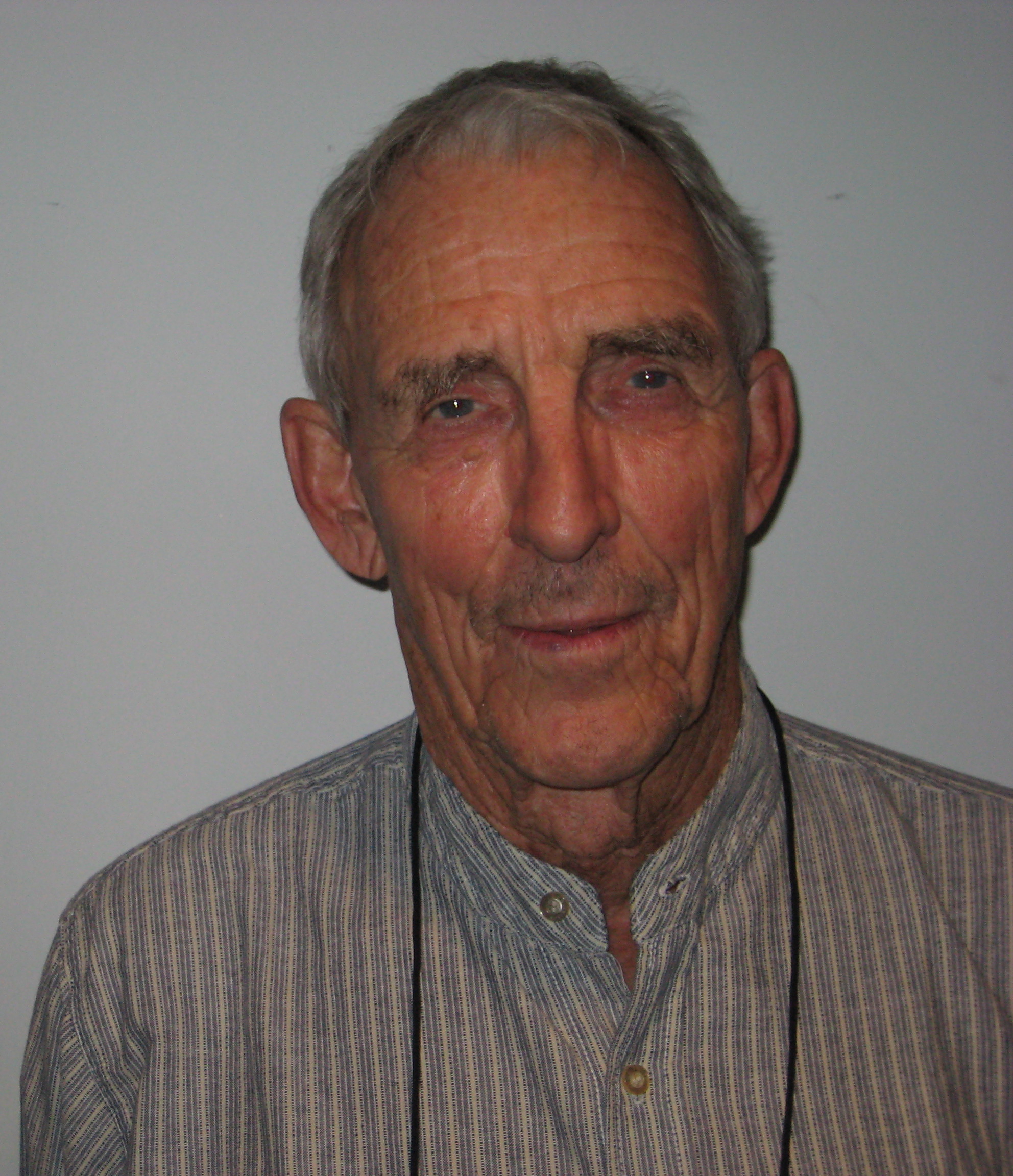
Frases de Peter Matthiessen

Peter Matthiessen [1]​ fue un naturalista y escritor estadounidense de libros de historia reales y de ficción. Wikipedia  

✵ 22. mayo 1927 – 5. abril 2014
Peter Matthiessen Foto
Peter Matthiessen: 10 citas0 Me gusta

Peter Matthiessen: Frases en inglés

“Yet that light is always present, like the stars of noon. Man must perceive it if he is to transcend his fear of meaningless, for no amount of “progress” can take its place.”

Peter Matthiessen libro The Snow Leopard

The Snow Leopard (1978)
Contexto: The progress of the sciences toward theories of fundamental unity, cosmic symmetry (as in the unified field theory) — how do such theories differ, in the end, from that unity which Plato called “unspeakable” and “indiscribable,” the holistic knowledge shared by so many peoples of the earth, Christians included, before the advent of the industrial revolution made new barbarians of the peoples of the West? In the United States, before spiritualist foolishness at the end of the last century confused mysticism with “the occult” and tarnished both, William James wrote a master work of metaphysics; Emerson spoke of “the wise silence, the universal beauty, to which every part and particle is equally related, the eternal One . . .”; Melville referred to “that profound silence, that only voice of God”; Walt Whitman celebrated the most ancient secret, that no God could be found “more divine than yourself.” And then, almost everywhere, a clear and subtle illumination that lent magnificence to life and peace to death was overwhelmed in the hard glare of technology. Yet that light is always present, like the stars of noon. Man must perceive it if he is to transcend his fear of meaningless, for no amount of “progress” can take its place. We have outsmarted ourselves, like greedy monkeys, and now we are full of dread.

“Today most scientists would agree with the ancient Hindus that nothing exists or is destroyed, things merely change shape or form; that matter is insubstantial in origin, a temporary aggregate of the pervasive energy that animates the electron.”

Peter Matthiessen libro The Snow Leopard

The Snow Leopard (1978)
Contexto: The ancient intuition that all matter, all “reality,” is energy, that all phenomena, including time and space, are mere crystallizations of mind, is an idea with which few physicists have quarreled since the theory of relativity first called into question the separate identities of energy and matter. Today most scientists would agree with the ancient Hindus that nothing exists or is destroyed, things merely change shape or form; that matter is insubstantial in origin, a temporary aggregate of the pervasive energy that animates the electron. … The cosmic radiation that is thought to come from the explosion of creation strikes the earth with equal intensity from all directions, which suggests either that the earth is at the center of the universe, as in our innocence we once supposed, or that the known universe has no center. Such an idea holds no terror for mystics; in the mystical vision, the universe, its center, and its origins are simultaneous, all around us, all within us, and all One.

“The progress of the sciences toward theories of fundamental unity, cosmic symmetry (as in the unified field theory) — how do such theories differ, in the end, from that unity which Plato called “unspeakable” and “indiscribable,” the holistic knowledge shared by so many peoples of the earth, Christians included, before the advent of the industrial revolution made new barbarians of the peoples of the West?”

Peter Matthiessen libro The Snow Leopard

The Snow Leopard (1978)
Contexto: The progress of the sciences toward theories of fundamental unity, cosmic symmetry (as in the unified field theory) — how do such theories differ, in the end, from that unity which Plato called “unspeakable” and “indiscribable,” the holistic knowledge shared by so many peoples of the earth, Christians included, before the advent of the industrial revolution made new barbarians of the peoples of the West? In the United States, before spiritualist foolishness at the end of the last century confused mysticism with “the occult” and tarnished both, William James wrote a master work of metaphysics; Emerson spoke of “the wise silence, the universal beauty, to which every part and particle is equally related, the eternal One . . .”; Melville referred to “that profound silence, that only voice of God”; Walt Whitman celebrated the most ancient secret, that no God could be found “more divine than yourself.” And then, almost everywhere, a clear and subtle illumination that lent magnificence to life and peace to death was overwhelmed in the hard glare of technology. Yet that light is always present, like the stars of noon. Man must perceive it if he is to transcend his fear of meaningless, for no amount of “progress” can take its place. We have outsmarted ourselves, like greedy monkeys, and now we are full of dread.

Autores similares

Henry Miller Foto
Henry Miller236
novelista estadounidense None
William Seward Burroughs Foto
William Seward Burroughs10
novelista, ensayista y crítico social estadounidense None
Boris Leonidovič Pasternak Foto
Boris Leonidovič Pasternak10
poeta y novelista ruso None
William Golding Foto
William Golding6
novelista y poeta británico None
Luigi Pirandello Foto
Luigi Pirandello9
dramaturgo, novelista y escritor de relatos cortos italiano None
Herta Müller Foto
Herta Müller6
novelista, poetisa y ensayista rumano-alemana None
Amos Oz Foto
Amos Oz18
novelista y periodista israelí None
José Saramago Foto
José Saramago115
escritor, novelista, poeta, periodista y dramaturgo portugu… None
Jean Cocteau Foto
Jean Cocteau30
poeta, novelista, dramaturgo, pintor, ocultista, diseñador,… None
George Santayana Foto
George Santayana13
filósofo, ensayista, poeta y novelista español (1863-1952) None