“una vez que algo está escrito, debe necesariamente suceder)”
Geoffrey Chaucer libro Los cuentos de Canterbury
Cuentos de Canterbury
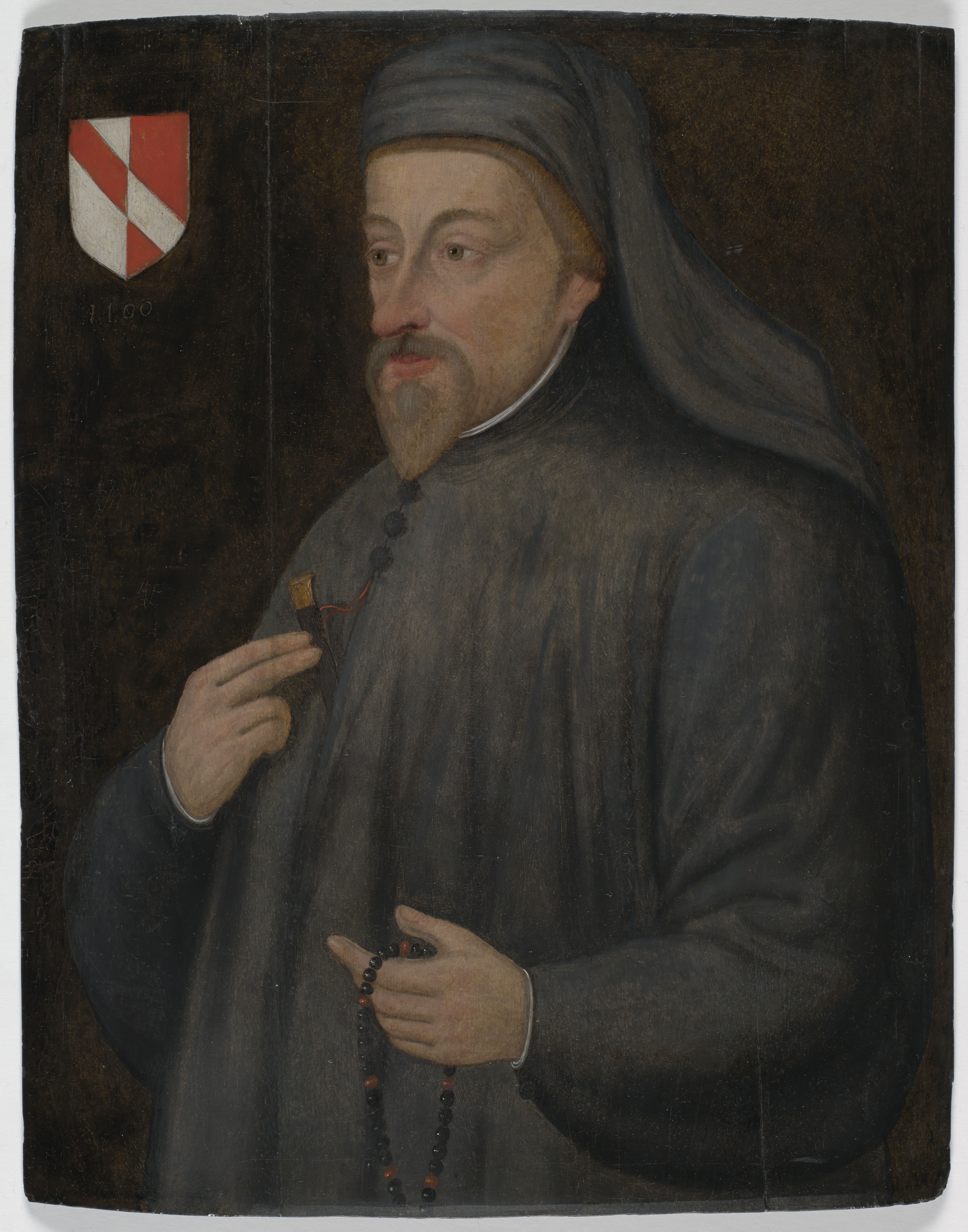
Geoffrey Chaucer ['ʤefɹi 'ʧɔ:sə] fue un escritor, filósofo, diplomático y poeta inglés, conocido sobre todo por ser autor de los Cuentos de Canterbury. Es considerado el poeta inglés más importante de la Edad Media y el primero en ser sepultado en el Rincón de los Poetas de la Abadía de Westminster.
También alcanzó fama durante su vida como alquimista y astrónomo y compuso un tratado sobre el astrolabio dedicado a su hijo de diez años Lewis. Aclamado por su obra más famosa, Los cuentos de Canterbury , entre las otras destacan también El libro de la duquesa , Casa de la fama , la Leyenda de las buenas mujeres y Troilo y Crésida .
La obra de Chaucer fue determinante para acreditar y legitimar el uso literario del inglés medio vernáculo en una época en la que los idiomas literarios dominantes en Inglaterra eran todavía el francés y el latín. Wikipedia
“una vez que algo está escrito, debe necesariamente suceder)”
Geoffrey Chaucer libro Los cuentos de Canterbury
Cuentos de Canterbury
“¿Qué hay mejor que la sabiduría? Una mujer. ¿Y qué hay mejor que una buena mujer? Nada.”
Fuente: Chaucer, Geoffrey. Los cuentos de Cantorbery, Volumen 1. Editorial Reus (s.a.), 1921. p. 233.
“«Antes de que cese el trueno, cae la lluvia.»”
Geoffrey Chaucer libro Los cuentos de Canterbury
Cuentos de Canterbury
“la virtud que corona la perfección es la paciencia".”
Geoffrey Chaucer libro Los cuentos de Canterbury
Cuentos de Canterbury
“Un hombre honrado y un ladrón nunca pueden pensar igual.”
Geoffrey Chaucer libro Los cuentos de Canterbury
Cuentos de Canterbury
“¿De qué sirve tener posesiones si un hombre carece de conocimientos?”
Geoffrey Chaucer libro Los cuentos de Canterbury
Cuentos de Canterbury
“¡Con qué rapidez invade la piedad los corazones nobles!”
Geoffrey Chaucer libro Los cuentos de Canterbury
Cuentos de Canterbury
“nada que es completo en sí mismo es más fuerte cuando se divide.”
Geoffrey Chaucer libro Los cuentos de Canterbury
Cuentos de Canterbury
Geoffrey Chaucer libro Los cuentos de Canterbury
Cuentos de Canterbury
“«Las palabras deben corresponder a la acción».”
Geoffrey Chaucer libro Los cuentos de Canterbury
Cuentos de Canterbury
“«El león está siempre al acecho para matar al inocente si puede.»”
Geoffrey Chaucer libro Los cuentos de Canterbury
Cuentos de Canterbury
“El amor es una cosa tan libre como el espíritu.”
Geoffrey Chaucer libro Los cuentos de Canterbury
Cuentos de Canterbury
“«Quien decide con prontitud, pronto se arrepiente»”
Geoffrey Chaucer libro Los cuentos de Canterbury
Cuentos de Canterbury
“«Todo lo que se escribe, se escribe para nuestra enseñanza.»”
Geoffrey Chaucer libro Los cuentos de Canterbury
Cuentos de Canterbury
Geoffrey Chaucer libro Los cuentos de Canterbury
Cuentos de Canterbury
Fuente: Chaucer, Geoffrey. Cuentos de Canterbury. Editorial e-artnow, 2014. ISBN 9788026806868.
Fuente: El cuento de la comadre de Bath, comienzo.
“nadie debe echar sobre sus espaldas fardo que no pueda llevar.”
Geoffrey Chaucer libro Los cuentos de Canterbury
Cuentos de Canterbury
“La avaricia es la causa de todos los vicios.”
Geoffrey Chaucer libro Los cuentos de Canterbury
Cuentos de Canterbury
“Los timadores, al final, acaban siendo ellos mismos timados.”
Geoffrey Chaucer libro Los cuentos de Canterbury
Cuentos de Canterbury
“haz bien a quien te perjudica y bendice a quien te maldice".”
Geoffrey Chaucer libro Los cuentos de Canterbury
Cuentos de Canterbury
“soy el árbol que florece antes de que el fruto madure.”
Geoffrey Chaucer libro Los cuentos de Canterbury
Cuentos de Canterbury
“la plenitud de la felicidad consistía en el deleite perfecto”
Geoffrey Chaucer libro Los cuentos de Canterbury
Cuentos de Canterbury
“es indispensable que la palabra corresponda a la acción.”
Geoffrey Chaucer libro Los cuentos de Canterbury
Cuentos de Canterbury
“el que habla mal no puede nunca recobrar sus palabras.”
Geoffrey Chaucer libro Los cuentos de Canterbury
Cuentos de Canterbury
“la virtud se aloja frecuentemente en los de condición humilde”
Geoffrey Chaucer libro Los cuentos de Canterbury
Cuentos de Canterbury
“es imposible hallar al caballo perfecto en todos los aspectos”
Geoffrey Chaucer libro Los cuentos de Canterbury
Cuentos de Canterbury
Geoffrey Chaucer libro Los cuentos de Canterbury
Contestación del caballero a la reina respondiendo a su requerimiento de que averigüase qué es lo que más desean las mujeres.
Cuentos de Canterbury
Fuente: El cuento de la comadre de Bath.
“El proverbio dice que muchos pocos hacen un mucho.”
Geoffrey Chaucer libro Los cuentos de Canterbury
Cuentos de Canterbury
Original: «The proverbe saith that many a smale maketh a grate».
“No empty handed man can lure a bird”
Geoffrey Chaucer libro Los cuentos de Canterbury
Fuente: The Canterbury Tales
Geoffrey Chaucer libro Los cuentos de Canterbury
Fuente: The Canterbury Tales
“people can die of mere imagination”
Geoffrey Chaucer libro Los cuentos de Canterbury
Fuente: The Canterbury Tales
“If gold rusts, what then can iron do?”
Geoffrey Chaucer libro Los cuentos de Canterbury
Fuente: The Canterbury Tales
Geoffrey Chaucer libro Troilus and Criseyde
Book 5, line 1835-1841
Troilus and Criseyde (1380s)
Contexto: O yonge fresshe folkes, he or she,
In which that love up-groweth with your age,
Repeyreth hoom fro worldly vanitee,
And of your herte up-casteth the visage
To thilke God that after his image
Yow made, and thynketh al nis but a faire
This world, that passeth sone as floures faire.
“Men may the wise atrenne, and naught atrede.”
Geoffrey Chaucer libro Troilus and Criseyde
Fuente: Troilus and Criseyde
“Eek for to winne love in sondry ages,
In sondry londes, sondry ben usages.”
Geoffrey Chaucer libro Troilus and Criseyde
Troilus and Criseyde (1380s)
Contexto: Ye knowe eek, that in forme of speche is chaunge
Withinne a thousand yeer, and wordes tho
That hadden prys, now wonder nyce and straunge
Us thinketh hem; and yet they spake hem so,
And spedde as wel in love as men now do;
Eek for to winne love in sondry ages,
In sondry londes, sondry ben usages.
Book 2, line 22-28
“And therfore, at the kynges court, my brother,
Ech man for hymself, ther is noon other.”
Geoffrey Chaucer libro Los cuentos de Canterbury
The Knight's Tale, l. 1181-1182
The Canterbury Tales
Geoffrey Chaucer libro Los cuentos de Canterbury
The Knight's Tale, IV, 1919 - 1921
The Canterbury Tales
Geoffrey Chaucer libro Troilus and Criseyde
Book 2, line 22-28
Troilus and Criseyde (1380s)
Contexto: Ye knowe eek, that in forme of speche is chaunge
Withinne a thousand yeer, and wordes tho
That hadden prys, now wonder nyce and straunge
Us thinketh hem; and yet they spake hem so,
And spedde as wel in love as men now do;
Eek for to winne love in sondry ages,
In sondry londes, sondry ben usages.
“This world nys but a thurghfare ful of wo,
And we been pilgrymes, passynge to and fro”
Geoffrey Chaucer libro Los cuentos de Canterbury
The Knight's Tale, lV, 1990 - 1992
The Canterbury Tales
Contexto: This world nys but a thurghfare ful of wo,
And we been pilgrymes, passynge to and fro;
Deeth is an ende of every worldly soore.
“Thanne is it wysdom, as it thynketh me,
To maken vertu of necessity,”
Geoffrey Chaucer libro Los cuentos de Canterbury
The Knight's Tale, lV 2177 - 2186
The Canterbury Tales
Contexto: p>What maketh this, but Juppiter the kyng,
That is prince and cause of alle thyng
Convertynge al unto his propre welle
From which it is deryved, sooth to telle,
And heer-agayns no creature on lyve
Of no degree availleth for to strive.Thanne is it wysdom, as it thynketh me,
To maken vertu of necessity,
And take it weel, that we may nat eschue;
And namely, that to us alle is due.</p
Geoffrey Chaucer libro Los cuentos de Canterbury
The Nun's Priest's Tale, l. 672-677
The Canterbury Tales
Geoffrey Chaucer libro Parlement of Foules
Parlement of Foules, l. 1-4; comparable with Hippocrates, Aphorisms 1:1
Fuente: The Parliament of Birds
“the greatest scholars are not usually the wisest people”
Geoffrey Chaucer libro Los cuentos de Canterbury
The Reeve's Tale, l. 134
The Canterbury Tales
Variante: The gretteste clerkes been noght wisest men.
Fuente: The Complete Poetry and Prose
“He helde about him alway, out of drede,
A world of folke.”
Geoffrey Chaucer libro Troilus and Criseyde
Book 3, line 1721
Troilus and Criseyde (1380s)
Geoffrey Chaucer libro Los cuentos de Canterbury
Fuente: The Canterbury Tales
Geoffrey Chaucer libro Los cuentos de Canterbury
General Prologue, l. 305 - 310
Fuente: The Canterbury Tales
Contexto: Of studie took he most cure and most hede.
Noght o word spak he more than was nede,
And that was seyd in forme and reverence,
And short and quik, and ful of hy sentence.
Souninge in moral vertu was his speche,
And gladly wolde he lerne, and gladly teche.
Geoffrey Chaucer libro Los cuentos de Canterbury
Fuente: The Canterbury Tales
“Ful wys is he that kan hymselven knowe!”
Geoffrey Chaucer libro Los cuentos de Canterbury
The Monk's Tale, l. 3329
The Canterbury Tales
Fuente: The Riverside Chaucer
“all that glitters is not gold”
Geoffrey Chaucer libro Los cuentos de Canterbury
Fuente: The Canterbury Tales
“Therfore bihoveth hire a ful long spoon
That shal ete with a feend.”
Geoffrey Chaucer libro Los cuentos de Canterbury
The Squire's Tale, l. 594-95
The Canterbury Tales


